Grilling in Cold Weather: What Actually Changes
The food does not care what month it is. The grill does. Longer preheats, a closed lid, more fuel and a light so you can see what you are doing.
Quick answer
Allow extra preheat time — Weber’s cold-weather guidance is to preheat to 500°F and expect it to take longer than it does in summer. Then keep the lid shut: Weber puts the cost of each opening at 5 to 7 minutes. Clear snow and ice from the grill and the path to it before you light anything, have more fuel on hand than the cook should need, and use a leave-in thermometer so you are reading a number instead of lifting the lid.
Cold weather does not change how meat cooks. It changes how a grill behaves: the metal is colder, the air around it is colder, and the wind is pulling heat off it the whole time. That means everything takes longer and everything costs more fuel. None of it is a reason to stop cooking outside between November and March — which is exactly when a grill is at its most useful, because the kitchen is busy and the oven is full.
1. The preheat is the part people get wrong
A grill that has been sitting at 20°F has to heat its own mass before it can heat anything else. Weber’s own cold-weather advice is to allow extra time to reach temperature, with a preheat to 500°F. On a gas grill that means all burners on high and patience; on charcoal it means waiting for the chimney to be fully ashed over rather than pouring early, because an underlit fire in the cold never recovers.
2. Every lid lift is expensive now
Weber’s figure is that each time you open the lid in the cold it adds 5 to 7 minutes to the cook. Three nosy checks on a chicken and you have added a quarter of an hour. This is the single best argument for a leave-in probe thermometer in winter: you get the number without paying for it in heat.
3. Plan for more fuel than you need
Charcoal burns through faster because the cooker is radiating more heat outward, and a propane tank that would comfortably do three cooks in July may not. Start with a full chimney rather than a half, and if the tank feels borderline, swap it before you light rather than halfway through dinner. A chimney starter matters more in the cold, not less, because it gets you to a properly lit fire in one go.
4. Clear the snow first, including the path
Weber’s guidance is explicit about keeping the grill and the pathway to it free of snow. The path is the part that gets skipped and the part that hurts: you are carrying a tray of raw meat out and a tray of hot food back, in the dark, on ice.
5. You cannot see anything
In December the grilling happens at night whether you like it or not. Working out doneness by the color of a crust is a bad method in daylight and a hopeless one by porch light. Two magnetic lights on the hood and a thermometer you can read without squinting solve the whole problem for about the price of a takeaway.
6. Pick cooks that suit the conditions
Cold weather rewards anything with the lid down and penalizes anything that needs constant attention. Good winter cooks: a whole chicken, pork shoulder, ribs, a tri-tip, thick-cut steaks finished indirect. Harder: thin cuts and anything you have to flip every ninety seconds, because the lid is open the whole time. If the plan is a long cook, read how to smoke on a charcoal grill and allow more time than the recipe says.
7. Shut it down properly
On charcoal, Weber’s cold-weather routine ends with closing all the vents when you are finished, which snuffs the remaining fuel instead of wasting it. Then cover the grill once it is cold. A cover is doing real work in winter: the enemy of a grill is water sitting on it and freezing, and that is what kills grates and fasteners long before the cookbox gives up.
What to look for in cold-weather gear
Three things, in this order. Reach and insulation in gloves — in the cold you are handling a chimney and a hot lid with numb hands, and a short glove is worse than none. A probe you leave in, so the lid stays shut. And light aimed where your hands are, not light in your eyes. A cover is the fourth, and the only one that matters after the cook rather than during it.
The four things that make winter grilling bearable
Picks from our shortlists, matched to the criteria above: hands, lid, light, then protection. Prices are fetched live.
How this is funded: we earn a commission if you buy through our links, at no extra cost to you. It never changes which gift we recommend, and we’ll tell you when we’d skip one. Full disclosure.
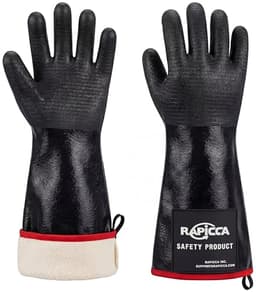
RAPICCA 14-Inch 932°F Heat-Resistant BBQ Gloves
Fourteen inches of reach rated to 932°F — for the cook moving a lit chimney and a hot lid with cold hands, where a short oven mitt is genuinely dangerous.
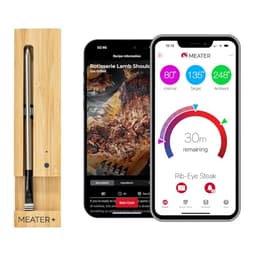
MEATER Plus Wireless Smart Meat Thermometer
A fully wireless leave-in probe that alerts a phone, so the lid stays shut. In cold weather Weber reckons each opening costs 5 to 7 minutes, which this removes entirely.
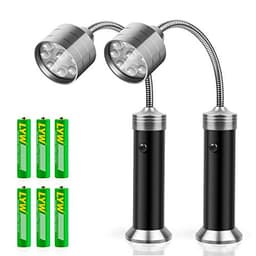
KOSIN Magnetic LED Grill Light (2-Pack)
Two magnetic gooseneck LEDs for the cook who is grilling in the dark by 5pm. Sticks to the hood and aims at the grate rather than at your face.
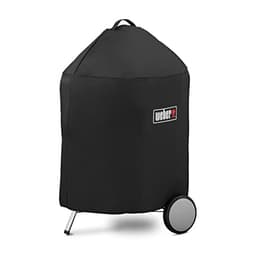
Weber Premium Grill Cover 7150, 22-Inch Charcoal Grills
For 22-inch Weber charcoal grills. Weber's own cover for the kettle, with UV inhibitors and a fastening strap — the thing standing between the grill and a winter of standing water.
If the grill in question is a griddle rather than a grate, the winter routine is the same with one addition: dry it and oil it every time, because a cold wet plate rusts fast. How to clean a Blackstone griddle covers that properly, and best grill covers compares seven covers including the griddle and kamado shapes.
Frequently asked questions
Can you grill in cold weather?
Yes, with three adjustments: preheat longer (Weber suggests preheating to 500°F and allowing extra time), keep the lid closed because each opening adds 5 to 7 minutes in the cold, and allow more fuel than the same cook needs in summer. Clear snow from the grill and the path first.
How much longer does it take to grill in winter?
Longer than the recipe, and the biggest variable is you. Weber's figure of 5 to 7 minutes added per lid opening in the cold usually dwarfs the effect of the air temperature itself, which is why a leave-in thermometer saves more time in winter than any other piece of gear.
Does cold weather affect a propane tank?
It affects how much you get through, which is the practical issue: a cold cooker radiates more heat and burns more fuel, so a tank that comfortably covered three summer cooks may not cover three winter ones. If the tank feels borderline, swap it before you light rather than mid-cook.
Should you use more charcoal in cold weather?
Yes. Start with a full chimney rather than a partial one, and expect the fire to fade sooner than it would in July. Getting the chimney fully ashed over before you pour matters more in the cold too, because an underlit fire never catches up.
What is the best thing to grill in winter?
Anything that cooks with the lid down: a whole chicken, ribs, pork shoulder, tri-tip, or thick steaks seared and then finished indirect. Thin cuts that need constant flipping are the worst choice, because the lid spends the whole cook open.
Do I need to cover my grill in winter?
If it lives outside, yes. The damage in winter is done by water sitting on and inside the grill and then freezing, which attacks grates, fasteners and ignition parts long before the cookbox fails. Cover it once it has cooled, never while it is still warm.
Sources
- Weber — 5 Tips for Grilling in the Cold — Allow extra time for the grill to reach temperature (preheat to 500°F); each time the lid is opened it adds 5 to 7 minutes; keep the grill and the pathway to it free of snow; close all vents on charcoal models when finished (accessed October 11, 2026)
- USDA FSIS — Food Thermometers — Where to place the probe, when to check, how to calibrate in ice water or boiling water, and the thermometer types compared (accessed September 18, 2026)
- Weber — Premium Grill Cover 7150 (22" charcoal grills) — UV inhibitors in the fabric resist fading; breathable and water resistant; fastening strap; fits 22" Weber charcoal grills without a side table and not the Smokey Mountain Cooker; polyester, spot clean only; out-of-carton 35" H x 25" W x 27" D (accessed October 8, 2026)
Keep reading
Best Grilling Gloves
Compared on rating, reach and grip — the spec that matters in winter.
See the glovesBest Grill Covers
Seven covers on published fit, fabric and warranty.
See the coversHow to Light a Charcoal Grill
The chimney routine, which matters more when it is freezing.
Read the guideBest Wireless Meat Thermometers
Know what is happening inside without opening the lid.
See the thermometersHow to Grill a Whole Chicken
The ideal lid-down winter cook.
Read the guideHow to Smoke a Turkey
The cold-weather cook that frees up the oven.
Read the guide