What makes tailgate gear different
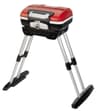
It has to travel lit-to-cold in a few hours. A grill that is still too hot to pack when the game ends is a genuine problem. Small propane grills cool much faster than charcoal, which is the main reason gas dominates parking lots.
Everything has to have a home. Loose tools in a trunk get lost, greasy or both. A case is worth more here than better tools would be — the opposite of the advice we give for a home cook in the tool set comparison.
There is no power and often no shelter. Anything that plugs in is out. Anything that blows over is a liability. Wind is the invisible enemy of parking-lot cooking, and it is why lids and hoods matter more than they do at home.
You are feeding a crowd in one sitting. Cooking surface area beats finesse. Nobody at a tailgate wants a perfectly rested ribeye; they want twenty things off the heat in the same fifteen minutes.
Gas or charcoal in a parking lot?
Gas, in almost every case. It lights instantly, it is controllable, and critically it stops being dangerous the moment you turn it off — whereas charcoal has to burn out or be extinguished, and hot ash in a trunk is not a risk worth taking.
Many venues also restrict charcoal specifically, and disposal is genuinely awkward when there is nowhere to safely dump ash. The honest exception is somebody who tailgates rarely and cares about smoke flavor above all else, in which case a small kettle and a plan for the ash works — our BBQ vs grilling guide explains what charcoal is buying them.
Grill or griddle?
A grate does burgers, dogs, sausages and chicken. A flat top does all of that plus everything that would fall through — onions, peppers, eggs for a morning game, cheese steaks, breakfast burritos — and it does volume better because the entire surface is usable at once.
For a group that eats the same four things, a portable grill is the simpler gift. For a group whose tailgate is a production, a tabletop griddle is the upgrade, and its footprint fits a folding table. The two are compared properly in charcoal grill vs flat-top griddle.
The lighting problem nobody buys for
Evening games mean the cooking finishes in the dark, and phone flashlights held by a friend are how most people deal with it. A magnetic LED light that clamps to a grill lid or a hood costs very little and is the accessory most likely to make someone say they never thought to buy one.
Two lights beat one, because a single light casts a hard shadow exactly where the food is. It also doubles as trunk lighting during pack-up, which is when things actually get left behind.
The cheap essentials that punch above their price
A pocket thermometer matters more away from home, not less. Cooking outdoors in wind, on a small grill, for people you want to impress, with no oven to rescue anything — that is exactly when guessing goes wrong. Chicken thighs and sausages are tailgate staples and both are easy to serve underdone. The USDA line is 165°F for all poultry, and our temperature chart covers the rest.
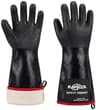
Long heat gloves earn their place at the other end of the day. Packing a hot grill, moving a hot grate, lifting a still-warm griddle top into a trunk — all of it is easier and considerably safer with gloves, and almost nobody brings a pair.
How to build a tailgate gift that works
If you have a large budget, buy the cooker and add a small consumable — a rub setis the obvious one — so the gift is not one large object alone.
If you have a modest budget, build a kit instead: a thermometer, a light and a good pair of tongs, boxed together. That is three things that solve three real parking-lot problems, and it costs less than a single mid-range grill. The gift basket roundup covers pre-made versions if you would rather not assemble one.
Whatever you choose, check what they already carry. Tailgaters tend to have a fixed kit that lives in a trunk, and the best gift is the gap in it rather than a second version of something already there.