What actually goes wrong on the Fourth
Not skill. Volume. A cook who produces a perfect steak on a Tuesday runs into a completely different set of problems when the grate is full and people are waiting, and every one of those problems has a gift attached to it.
| The problem | What fixes it |
|---|
| Four things cooking, one thermometer | A multi-probe thermometer |
| Corn and vegetables falling through | A large grill basket |
| Not enough grate for everyone | A second portable grill |
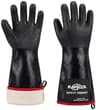
| Reaching across a full, hot grate | Long heat gloves |
| Still cooking when it gets dark | A grill light |
| Everything tastes the same | A rub sampler |
Why a multi-probe thermometer tops this list
On a normal cook, one instant-read probe is plenty — you check one thing, then the next. On a full grate with a queue of people, the checking itself becomes the bottleneck, and the cook ends up either serving underdone chicken or overcooking everything to be safe.
Several probes left in several pieces of meat, reporting to one base, removes that entirely. It is the difference between guessing across a crowded grate and knowing. For the rest of the year it is the tool for long cooks — the full category is in our wireless thermometer roundup.
The second-grill trick
The most useful thing at a big cookout is often not a better grill but a second one. A portable charcoal grill alongside the main gas grill doubles the capacity, and it lets the cook separate the fast food from the slow food instead of juggling both on one grate.
It is also the gift that keeps working long after the day — it goes camping, it goes to the beach, it goes tailgating in the autumn. That is a better outcome than a gift bought for one afternoon. Our tailgating list covers the same gear for the other half of the year.
Host gifts: what to bring to somebody else's cookout
Different job entirely. A host gift should be consumable or small, because the host does not want to be given an object to find space for while they are cooking for twenty people.
A rub or sauce set is close to perfect: it gets opened on the day if they fancy it, it does not need storing, and it costs the right amount for a gift that is a courtesy rather than a present. A cheap second instant-read thermometer is the sleeper pick — every host with a crowded grate wishes they had two. Avoid anything that needs assembling, anything bulky, and anything that implies their current gear is bad.
The one safety point worth making
The Fourth is also the day people cook large quantities of chicken and burgers for other people, often in hot weather, which is precisely when undercooking matters most. The USDA safe minimums are 165°F for all poultry and 160°F for ground meat — and color is not a reliable test, because ground beef can brown before it is safe and stay pink after it is.
That is not a reason to be nervous; it is the reason a thermometer is the top pick on this page. Our temperature chart has the full list, and the burger guide explains why ground meat has a different rule to steak.
Buying it in time
Grilling gear is one of the more predictable seasonal shortages — the popular thermometers and portable grills sell out in the last week of June, and shipping slows down at the same time. If you are ordering for the day itself, order the week before, not the weekend before.
If you have left it too late, our last-minute list is built for exactly that situation: no sizing, no setup, nothing that needs to arrive assembled.