What makes a kamado different, in one table
Three facts about the cooker decide which gifts land: it is ceramic and holds heat, it runs on lump charcoal lit from below, and the dome is meant to stay closed for hours.
| Kamado fact | What it means for a gift | The pick | Avoid |
|---|
| Thick ceramic holds heat for hours | Everything the cook touches — grate, deflector, dome handle — is hot | Long-cuff heat gloves | Thin silicone mitts |
| Lump charcoal, lit from a starter in the pile | Owners light with fire starters, not fluid | Paraffin lighter cubes | Lighter fluid; a chimney is optional at best |
| The dome stays shut | They cannot see or poke the meat, so a remote probe earns its keep | Wireless or multi-probe thermometer | — |
| Wood chunks sit on the lump | It already smokes | A rub, or a bag of chunks in a new wood | Smoker boxes, pellet tubes |
| Round, deep grate — usually 18 inches | Space is the limit on rib day | Rib rack (fits 18-inch-plus) | Rectangular toppers and baskets that block airflow |
Gloves first, because everything is hot
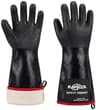
On a gas grill the hot parts are obvious and the handle is cool. On a kamado, the whole cooker is a heat store: the ceramic body, the cast-iron top vent, the heat deflector that has to be lifted in and out, and a grate that sits deep inside a dome. Owners move all of it by hand. Fourteen-inch RAPICCA neoprene gloves rated to 932°F, with a textured grip and a wipe-clean surface, are the gift almost no kamado owner buys for themselves and every one of them uses. They run large. For the cook who wants dexterity over coverage, the five-finger Grill Armor pair in our glove comparison is the alternative.
Lighting: cubes, not fluid
Kamado owners light a pile of lump charcoal from a fire starter tucked into it, then close the dome and let the vents bring it to temperature. Lighter fluid never goes near the cooker — Big Green Egg’s own safety guidance says to avoid lighter fluid or any flammable liquid in the EGG and to use fire starters instead — so a box of Weber paraffin cubes is the consumable they always need more of. Ninety-six cubes is most of a season, they light with a match, and they leave no taste. A chimney starter, the classic charcoal gift, is optional on a kamado at best; if they also own a kettle, our chimney starter roundup has the one to give.
Thermometers: the dome-stays-shut problem
A kamado’s whole trick is stability, and every time the dome opens it loses it. Owners are trained not to look. That makes a remote thermometer more useful here than on any other cooker: the MEATER Plus is one fully wireless probe that reports the meat and the ambient temperature to a phone with no cable pinched under the gasket, and alerts the moment the target is hit. It is one probe and it needs a charged phone nearby. The ThermoPro TP25 is the overnight-brisket pick: four color-coded probes, so one can watch the pit while three watch the meat, with a big backlit base readable across the yard. Our wireless probe vs multi-probe comparison settles which suits them.
Space on the grate: the rib rack
The most common kamado is 18 inches across and deep rather than wide, which is perfect for a pork shoulder and cramped for three racks of ribs. A stainless rib rack stands the racks upright, triples the capacity of the grate, folds flat to store, and fits 18-inch and larger cookers. It is a niche gift — it does ribs and not much else — which is exactly why it reads as thoughtful to someone whose rib day is always one rack short.
The end of the cook, and the book
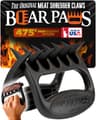
Long cooks end in pulling and slicing, and Bear Paws meat claws are the under-$15 answer to the first: a pair of clawed grips that shred a shoulder in seconds and lift a whole cut off the grate. The Ironwood end-grain carving board is the upgrade for the second — a 10-fluid-ounce channel to catch what runs out of a rested brisket, kind to a knife, heavy and hand-wash only. Pair it with the 12-inch slicer from our gifts for meat lovers list if the budget stretches.
Project Smokeis the book for a new kamado owner specifically: Steven Raichlen’s seven-step smoking method plus a hundred recipes, aimed at the cook moving from grilling into smoking, which is exactly the journey a first kamado sends people on. For the brisket obsessive who is further along, Franklin Barbecue from our cookbook roundup is the step up.
The light
An overnight cook means vent checks at midnight, and a kamado in the dark is a black dome in a black yard. Two KOSIN magnetic gooseneck lights clip to the metal band or the top vent and aim at the thermometer. They are not fully waterproof, so they come in when the cook is done.
If they want a kamado but don’t own one
The Kamado Joe Classic II is the ceramic kamado in full: 227 lb of thick ceramic that the maker rates from 225 to 750°F, a two-tier rack system that cooks at two heights at once, a top vent that holds its setting when the dome opens, and a limited lifetime warranty on the body. It is by far the most expensive thing on this site, it is a group-gift or milestone purchase rather than a birthday one, and where it is assembled is where it stays — confirm a level, sheltered, permanent spot before anybody spends this much. The Char-Griller AKORN, an insulated-steel kamado at a fraction of the price and 88 lb, is the way in for a smaller budget; both are compared in our charcoal grill roundup.
Two things to check before you buy
Covers and accessories are model-specific. A cover, a deflector plate or a grate expander sized for a Classic will not fit a Big Joe or an AKORN. Nothing on this list is sized.
They may already own the gloves. Kamado owners are a well-equipped bunch. If the gloves are covered, the rib rack and the TP25 are the two picks least likely to be duplicated.
Shopping in November? Kamados themselves appeared in last season’s Black Friday coverage; our Black Friday and Cyber Monday grill deals page has what the pattern looked like. And for the owner of a pellet grill rather than a kamado, the Traeger and pellet grill gifts list is the sibling page.