How to Grill a Whole Chicken
A whole bird on the grill is indirect heat, 350 to 400°F and about an hour and a half — and one number that is not negotiable. Here is the method, plus where beer can chicken fits.
Quick answer
Set the grill up for indirect cooking — one burner on and one off, or the bird between two charcoal baskets — and run it at 350 to 400°F. Weber gives about 1½ hours for a whole chicken to reach 165°F, which is the USDA’s safe minimum internal temperature for poultry. Measure in the thickest part of the thigh without touching the bone, then rest it before carving.
A whole chicken is the cheapest impressive thing you can cook outdoors, and the one that most often goes wrong, because a bird is several cuts of meat attached to each other. The breast is lean and finishes early; the thighs are fatty and want longer; the skin wants heat it cannot have while the inside catches up. Direct heat cannot reconcile those. Gentle indirect heat can.
The numbers
| Whole chicken on the grate | Beer can chicken | |
|---|---|---|
| Setup | Indirect — one burner on, one off, or between two charcoal baskets | Indirect medium heat, upright on a stand or can |
| Grill temperature | 350–400°F, dampers half closed | 375–425°F |
| Bird size | — | About 4 lb |
| Time | About 1½ hours | 1¼ to 1½ hours |
| Pull at | 165°F | 160–165°F in the thickest part of the thigh, not touching bone |
| Rest | 20–30 minutes | 5–10 minutes |
Both columns are Weber’s own figures, from two different pages, and they disagree about the rest: 20 to 30 minutes for a bird on the grate, 5 to 10 for a beer can chicken. We are showing both rather than splitting the difference. A longer rest gives you juicier meat and cooler skin; a shorter one does the opposite. Either way the internal temperature keeps rising a little while it sits.
165°F is the one number that is not a preference
With beef you can argue about doneness. With poultry you cannot: the USDA’s safe minimum internal temperature for chicken is 165°F, and Weber’s whole-chicken guidance lands on the same number. Weber makes the useful point that the grill temperature is far less critical than the internal temperature of the bird — if the grill runs a little cool the chicken takes longer, and that is all.
Where you measure decides whether the number means anything. Put the probe into the thickest part of the thigh and keep it off the bone, which conducts heat and will read high. Check both thighs if you can; a bird that sat unevenly over the heat will not be symmetrical. Our guide to using a meat thermometer covers probe placement cut by cut, and the USDA is explicit that color and clear juices are not reliable tests.
Indirect, and what that means on your grill
On a gas grill, Weber’s instruction is one burner on and one off, with the bird over the unlit side. On charcoal, put the chicken equally between two charcoal baskets so the heat comes from both sides rather than underneath. Closing the top and bottom dampers halfway is how you settle a kettle into the 350–400°F range.
Two practical notes. First, fat renders out of a whole bird for ninety minutes, so anything directly underneath it will catch — which is the other argument for having no fire there. Second, a drip pan under the bird saves a long cleanup and gives you the start of a sauce. If the idea of indirect heat is new, read direct vs indirect heat first; it is the concept this whole cook rests on.
Beer can chicken: what it does and does not do
The upright method stands the bird on a can or a stand so hot air circulates all the way around it. Weber’s recipe uses an approximately 4 lb chicken with half the beer poured off, cooked over indirect medium heat for 1¼ to 1½ hours to 160–165°F in the thigh.
It genuinely does two things: it keeps the bird upright so the skin crisps on all sides, and it makes a centerpiece people remember. What it does not reliably do is flavor the meat with beer — the liquid mostly steams. Buy the stand for the even cooking and the theatre, not for the beer, and know that a plain roasting rack achieves most of the same thing. A purpose-made stand is also a great deal more stable than balancing a bird on an open can, which is the version that ends with dinner on the patio.
What to look for in the gear
A whole chicken needs less than you would think, and one thing it absolutely needs.
The requirement is a thermometer. 165°F in the thigh is a safety number rather than a preference, so this is not a cook to judge by eye. For a ninety-minute cook, a leave-in probe earns its place: it tracks the climb without you lifting the lid and losing heat every fifteen minutes, and a multi-probe unit lets you watch a thigh and the grate at the same time. An instant-read is the cheap, universal alternative — just expect to open the grill to use it.
The useful extras are a stable upright stand if you want the beer-can method, which is safer and steadier than a can alone, and a handful of smoking wood. Chicken takes smoke well over ninety minutes, and a mild fruit wood is the forgiving choice — strong woods can overwhelm poultry.
What this cook needs
Four picks from our shortlists, matched to the criteria above: a way to measure 165°F, plus the two extras that change the result. Prices are fetched live.
How this is funded: we earn a commission if you buy through our links, at no extra cost to you. It never changes which gift we recommend, and we’ll tell you when we’d skip one. Full disclosure.
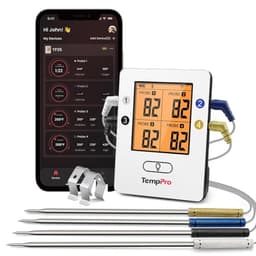
TempPro TempSync PRO TP25 4-Probe Bluetooth Thermometer
Four leave-in probes and long-range Bluetooth, so you watch a thigh climb to 165°F across ninety minutes without opening the lid at all.
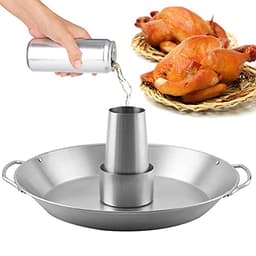
Char Chimney Pick Stainless Beer Can Chicken Roaster
A stainless stand that holds the bird upright far more securely than balancing it on an open can — the even-cooking and crisp-skin part of the beer can method.
$26.99 · View on AmazonPrice as of October 5, 2026. #ad How we’re funded
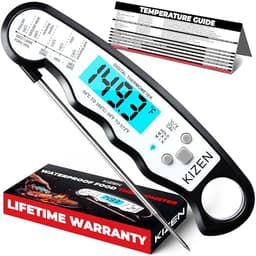
KIZEN IP67 Instant-Read Meat Thermometer
A fully waterproof instant-read with a magnetic back, for well under fifteen dollars. The simplest way to check the thigh before carving.
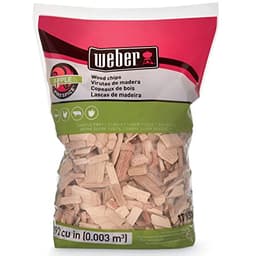
Weber Apple Wood Smoking Chips (2 lb)
Mild apple wood. Ninety minutes is long enough for a whole bird to take on real smoke, and a fruit wood is the forgiving choice for poultry.
How to grill a whole chicken, step by step
- Season it, including under the skin. Weber pulls the skin away from the breast and seasons in there as well as on the outside.
- Set the grill up for indirect heat. One burner on and one off, or the bird between two charcoal baskets.
- Settle it at 350 to 400°F. On a kettle, close the top and bottom dampers halfway.
- Cook about 1½ hours, lid down. Resist opening it; every look costs heat and time.
- Check 165°F in the thigh. Thickest part, not touching the bone.
- Rest before carving. Weber’s whole-chicken guidance is 20 to 30 minutes; its beer can recipe says 5 to 10.
If the skin is not crisp
Indirect heat cooks a bird beautifully and browns the skin only moderately. If you want it crisper, finish the bird over the hot side for the last few minutes with the lid off and watch it constantly — rendered fat on hot bars flares. Dry skin browns better than wet, so pat the bird dry before it goes on and resist basting in the first hour.
For the parts of a chicken cooked separately, see how to grill chicken thighs and how to grill chicken breast — the leanest, least forgiving cut on the grill.
Frequently asked questions
How long does it take to grill a whole chicken?
Weber gives about 1½ hours for a whole chicken to reach 165°F with the grill at 350 to 400°F. Its beer can chicken recipe gives 1¼ to 1½ hours for an approximately 4 lb bird. Size and grill temperature both move the number, so cook to 165°F rather than to the clock.
What temperature do you grill a whole chicken at?
350 to 400°F, with the heat indirect. On a charcoal kettle, closing the top and bottom dampers halfway gets you there. Weber notes the grill temperature is less critical than the chicken's internal temperature — a cooler grill just takes longer.
What internal temperature should a whole chicken be?
165°F, measured in the thickest part of the thigh without touching the bone. That is the USDA's safe minimum internal temperature for poultry and it is not a doneness preference. Weber's beer can recipe gives 160 to 165°F in the same spot.
Do you grill a whole chicken direct or indirect?
Indirect. A whole bird needs an hour and a half, which will burn over direct heat long before the inside is safe, and rendering fat dripping onto a live fire causes flare-ups. One burner on and one off, or the bird between two charcoal baskets.
Does beer can chicken actually taste of beer?
Not really — the liquid mostly steams, and the flavor contribution is slight. What the method genuinely does is hold the bird upright so hot air circulates all the way around it, which crisps the skin evenly, and it makes a centerpiece. A stand is far more stable than an open can.
Should you spatchcock a chicken for the grill?
Flattening a bird shortens the cook and evens it out, and plenty of cooks prefer it. Weber's whole-chicken guidance covers the bird left intact, which is the method and the timing on this page; if you butterfly it, expect it to finish sooner and check 165°F in the thigh either way.
Sources
- Weber — Basic Grilling Tips: How to Grill a Whole Chicken — Indirect setup with one burner on and one off (or the bird between two charcoal baskets), dampers half closed for 350-400°F, about 1½ hours to reach 165°F, then rest 20 to 30 minutes (accessed October 5, 2026)
- Weber — Beer Can Chicken — A 4 lb chicken over a half-emptied can, indirect medium heat (375-425°F), 1¼ to 1½ hours to 160-165°F in the thickest part of the thigh away from the bone, rest 5 to 10 minutes (accessed October 5, 2026)
- USDA FSIS — Safe Minimum Internal Temperature Chart — The USDA's official safe minimum internal cooking temperatures for beef, poultry, pork and more (accessed July 21, 2026)
- USDA FSIS — Doneness Versus Safety — USDA on why color is not a reliable doneness test and a thermometer is (accessed July 21, 2026)
Keep reading
How to Grill Chicken Thighs
The forgiving cut, with crisp skin if you cook them in the right order.
Read the guideHow to Grill Chicken Breast
The leanest, least forgiving cut on the grill.
Read the guideGrilling Temperature Chart
The USDA safe minimums for poultry, beef and pork in one place.
See the chartDirect vs Indirect Heat
The arrangement this entire cook depends on.
Read the guideBest Wireless Meat Thermometers
For a ninety-minute cook you would rather not keep opening.
See the thermometersBest Smoker Accessories
Wood and boxes, if you want smoke on the bird.
See the accessories