How to Clean a Blackstone Griddle
Blackstone's own routine, in order: scrape, water while it is warm, scouring pad, dry, oil. And the one product that ruins a plate faster than anything else.
Quick answer
Blackstone’s own routine is seven steps: let the griddle cool, scrape the surface with a metal spatula or scraper, wipe it with paper towel, pour water on while it is still warm for anything stuck, rub gently with a scouring pad, rinse off with paper towels, and dry it with a cloth. Then coat it with a thin layer of oil before it goes away. Once a plate has been cooked on, Blackstone says to “ditch the soap and just use water while the griddle is warm” — and never to use detergents or oven cleaners.
A flat top is not a grill, and cleaning it like one is how people wreck them. There are no bars to burn food off and no grates to scrub; there is a single sheet of seasoned steel whose entire non-stick property is a thin layer you built on purpose. Every cleaning decision comes down to one question: does this protect that layer, or strip it?
Blackstone’s routine, in order
The steps below are Blackstone’s own, from its published griddle-care guide. The tools it lists are a metal spatula, paper towels, hot water, a scouring pad and cooking oil — which is the whole kit, and notably does not include a bottle of anything.
- Let it cool down. Not cold — the water step wants it warm — but off the boil. A screaming-hot plate flash-steams water straight off and can warp.
- Scrape. A metal spatula or a scraper, pushing everything toward the grease channel. This is the step that does most of the work, and on a well-seasoned plate it does nearly all of it.
- Wipe with paper towel. Carefully — it is still warm.
- Water on, while warm, for anything stuck. Blackstone’s wording is to pour some water onto the griddle while it is still warm, because hot water lifts harder residue. This is the trick that replaces scrubbing.
- Scouring pad, gently. Gently is doing real work in that sentence. You are lifting residue, not sanding the seasoning off.
- Rinse off with paper towels. Get the water and the lifted gunk off the plate entirely.
- Dry it with a cloth. Bare steel plus standing water equals rust, and it does not take long.
Then oil it. Blackstone’s guidance is to coat the plate with a layer of oil between uses, naming its own seasoning conditioner or a non-stick cooking spray. This is the step people skip and then wonder why the plate has orange patches in April.
The things that actually ruin a griddle
| Do not | Why | Do this instead |
|---|---|---|
| Soap, after the first-ever wash | Blackstone says to ditch the soap once a griddle has been cooked on — it works against the seasoning | Hot water while the plate is warm |
| Detergents or oven cleaner | Blackstone names both explicitly as things not to use | Scrape, then water, then a pad |
| A wire-bristle brush | Nothing for it to do on a flat surface except shed wire onto it | A metal scraper or a wooden scraper |
| Leaving it wet | Bare or thinly seasoned steel rusts quickly | Dry with a cloth, then oil |
| Leaving it uncovered outside | Blackstone’s own care advice is a heavy-duty cover and a cool, dry place | A fitted griddle cover; a hood is not a cover |
| Ignoring rust | It spreads and pits the plate | Scrape back to steel and re-season |
Between cooks, and at the end of the season
Day to day, this is a two-minute job: scrape, wipe, thin coat of oil. The longer jobs are seasonal. If the griddle is going to sit unused for weeks, clean it properly, oil it a little more generously than usual, and cover it. If it has already rusted, you are not cleaning any more — you are starting over, scraping back to steel and running the seasoning routine again, which is set out step by step in how to season a Blackstone griddle.
Does this apply to other flat tops?
Yes, with the caveat that you should follow your own maker’s instructions where they differ. Blackstone is the brand most people mean when they say griddle, but the underlying physics are identical for any rolled-steel plate: scrape it, use water rather than chemistry, dry it, oil it. Enameled and ceramic-coated plates are a different material with different rules.
What to look for in griddle-cleaning gear
A scraper with a straight edge wide enough to push residue in one pass. Something abrasive but not aggressive — a pad, not a wire brush. A way to re-oil thinly, because wiping oil out of a bottle leads to too much every time. And a cover that fits the actual griddle, which is the only one of the four that protects the plate when you are not there.
The four things worth owning for a flat top
Picks from our shortlists, matched to the criteria above: scrape, lift, re-oil, cover. Prices are fetched live.
How this is funded: we earn a commission if you buy through our links, at no extra cost to you. It never changes which gift we recommend, and we’ll tell you when we’d skip one. Full disclosure.
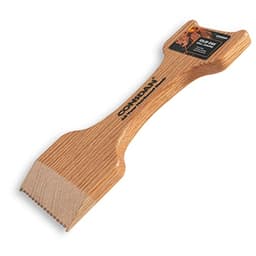
CONSDAN Solid Oak Wooden Grill Scraper
A solid oak scraper that conforms to the plate as it wears and cannot shed wire onto the cooking surface, which is the whole argument against a brush here.
$18.99 · View on AmazonPrice as of October 10, 2026. #ad How we’re funded
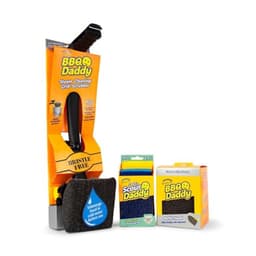
Scrub Daddy BBQ Daddy Grill Cleaner Kit (4-Piece)
A four-piece cleaning kit for the jobs a scrape does not finish — the abrasive-but-not-wire option for lifting residue off a warm plate.
$44.98 · View on AmazonPrice as of October 10, 2026. #ad How we’re funded
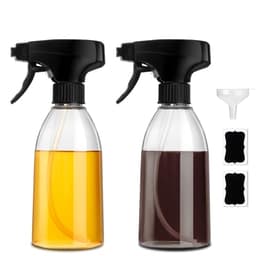
gmisun Refillable Oil Mister (2-Pack)
Two refillable misters. The point is dose control: seasoning and re-oiling both fail when the layer is too thick, and a mister makes thin easy.
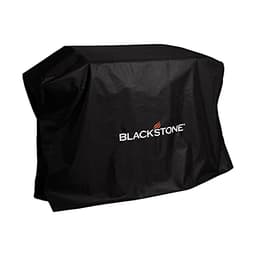
Blackstone 5483 Griddle Cover, 28-Inch
Blackstone's own 28-inch cover. Its care guide calls for a heavy-duty cover and a dry place, and a hood on its own does not do that job.
If the griddle itself is still a decision rather than a possession, Blackstone 22 vs 28 compares the two sizes most people choose between, and best flat top griddles covers eight of them on published cooking area and zones. For the tools that go on the plate rather than clean it, see gifts for Blackstone owners.
Frequently asked questions
How do you clean a Blackstone griddle after cooking?
Blackstone's routine is: let it cool, scrape with a metal spatula or scraper, wipe with paper towel, pour water on while it is still warm for stuck-on food, rub gently with a scouring pad, rinse off with paper towels, and dry with a cloth. Then coat the plate with a thin layer of oil before storing it.
Can you use soap on a Blackstone griddle?
Only on the very first wash of a brand-new plate, before any seasoning exists. Blackstone's guidance for a griddle that has been cooked on is to ditch the soap and just use water while the griddle is warm, and it names detergents and oven cleaners as things not to use at all.
What do you clean a griddle with?
The tool list in Blackstone's own care guide is a metal spatula, paper towels, hot water, a scouring pad and cooking oil. That is it — no cleaning products. A wooden or metal scraper does the heavy lifting and water does the rest.
Should you oil a griddle after every use?
Yes. Blackstone's advice is to coat the plate with a layer of oil between uses, using its seasoning conditioner or a non-stick spray. It takes seconds, it is what keeps rust off bare-ish steel, and it adds to the seasoning layer rather than just protecting it.
Can you use water on a Blackstone?
Yes, and it is part of the official routine — pour water on while the plate is still warm to lift stuck-on food. What you must not do is leave water sitting on it. Rinse the water off with paper towels and dry the plate with a cloth.
How do you get rust off a griddle?
That is a re-seasoning job rather than a cleaning job: scrape the rust back to bare steel, then run the full seasoning routine again — burners on max, very thin layers of oil, three or four rounds. Our Blackstone seasoning guide walks through it.
Do I need a cover for my griddle?
If it lives outside, yes. Blackstone's care guide calls for storing the griddle in a cool, dry place and using a heavy-duty cover to keep off dust, scratches and rust. A built-in hood keeps rain off the plate from above and does nothing about the rest.
Can you use a wire brush on a flat top?
No. There is nothing for bristles to reach on a flat surface, and the only thing a wire brush reliably does on a griddle is leave wire behind on the cooking surface. Use a metal or wooden scraper and a pad.
Sources
- Blackstone — How to Take Care of Your Griddle: Complete Guide — Tools: a metal spatula, paper towels, hot water, a scouring pad and cooking oil. Let it cool, scrape, wipe with paper towel, pour water on while still warm for stuck-on food, rub gently with a scouring pad, rinse off with paper towels, dry with a cloth. Once a griddle has been cooked on, “ditch the soap and just use water while the griddle is warm” and do not use detergents or oven cleaners. Coat with a layer of oil between uses; store in a cool dry place under a heavy-duty cover (accessed October 11, 2026)
- Blackstone — How to Season Your Griddle: Complete Guide — Soapy water once before the first cook, burners on max for 10-15 minutes until the plate browns, oil wiped on so thin you are almost wiping it off, and 3 to 4 rounds until the plate is dark brown (accessed October 5, 2026)
Keep reading
How to Season a Blackstone Griddle
The routine that creates the layer this page protects.
Read the guideBlackstone 22 vs 28
Which griddle size to buy, on Blackstone's published figures.
Read the comparisonBest Flat Top Griddles
Eight flat tops from a 17-inch tabletop to a four-burner station.
See the griddlesBest Grill Brushes
Bristle-free cleaning, which matters even more on flat steel.
See the brushesBest Grill Covers
Including the griddle shapes, on published fit and fabric.
See the coversHow to Clean a Grill
The grate version of this job, in two minutes.
Read the guide