How to Season a Blackstone Griddle
Blackstone's own routine, in order: wash it once, run the burners flat out, and wipe on oil so thin you are almost taking it back off. Three or four rounds and the plate is black.
Quick answer
Wash the new plate once with soapy water and rinse it. Turn the burners to max and preheat for 10 to 15 minutes until the steel starts to brown. Wipe on a very thin layer of oil — Blackstone’s instruction is to use the paper towel “as if you’re trying to wipe all the oil off” — and let it smoke. Blackstone says the plate takes about 30 minutes to reach its smoke point, after which you can turn the griddle off. Repeat for 3 to 4 rounds, until the plate is dark brown.
A new griddle arrives as bare steel with a protective coating on it, and bare steel does two things you do not want: it sticks, and it rusts. Seasoning fixes both. What you are building is not a coating you apply, it is a chemical change — thin layers of oil heated past their smoke point stop being oil and bond to the metal as a hard, dark, slick surface. That is why the instructions below are so insistent about thinness and heat. A thick layer of oil does not become seasoning. It becomes a sticky mess.
The good news is that this is a one-afternoon job done once, and after that cooking on the griddle maintains it. Blackstone’s own guide is the authority here and it is refreshingly specific, so the whole of this page follows it.
The routine, as Blackstone publishes it
| Step | What Blackstone says |
|---|---|
| 1. Wash, once only | Fill a bucket with water and a little dish soap, pour it gently over the plate, then rinse with clean water |
| 2. Preheat | Burners on the max setting, 10 to 15 minutes, until the griddle top starts to brown |
| 3. Oil | A very thin layer — “use the paper towel as if you’re trying to wipe all the oil off” |
| 4. Avoid | Thick oil puddles, and dry spots |
| 5. Let it smoke | About 30 minutes for the plate to reach its smoke point, then the griddle can be turned off |
| 6. Repeat | 3 to 4 rounds of initial seasoning, until the plate is dark brown |
That is the entire first-time process. Note the ordering of step 1: the soap wash happens before any seasoning exists, to get the manufacturing residue off. Once the plate is seasoned, soap is no longer part of the routine — the point of the layer you have just built is that it stays there.
Thin is the whole technique
If you take one thing from this page, take this. Blackstone’s phrasing is almost aggressive about it: wipe the oil as though you are trying to remove all of it. The plate should look barely damp, not glossy.
The reason is physical. A thin film can polymerize all the way through — every molecule gets hot enough to change. A thick film cooks on the outside and stays oily underneath, which is what produces the tacky, blotchy, patchy finish people describe when they say their seasoning “went wrong”. Blackstone’s guide names both failure modes to avoid: thick puddles and dry spots. Even and almost invisible is the target.
Include the walls of the griddle plate, not just the cooking surface. The edges are where rust starts, because that is where oil gets wiped away and water collects.
Which oil
Blackstone recommends its own Griddle Seasoning & Cast Iron Conditioner, and its guide also lists canola, flax, vegetable, shortening and olive oil as oils that work. It does not publish smoke points for those, and we are not going to invent them — the practical point is that any of the listed oils will do the job if the layer is thin enough and the plate gets hot enough.
What matters more than the brand of oil is consistency: finish the initial seasoning with whatever you start with, rather than switching halfway and introducing a layer that behaves differently.
After the first day
Blackstone’s position is that once the initial seasoning is done, simply cooking on the griddle keeps adding to the layer. Between uses, it suggests applying its seasoning product or a non-stick spray as maintenance. In practice the routine most griddle owners settle into is: scrape the plate down while it is still warm, wipe it, put a very thin coat of oil on, and shut the hood.
Expect food to stick a little during the first couple of cooking sessions. That is normal and it is not a sign the seasoning failed — keep cooking and keep oiling before and after each use, and the layer evens out as it builds.
Rust: prevention beats rescue
Rust is the thing that actually kills griddles, and it is a water problem rather than a use problem. Blackstone’s advice is a heavy-duty cover to protect the plate from the weather. If the griddle has an integrated hood, that is a start — but a hood is not a cover, and a plate left out through a wet week will find the gaps.
If surface rust does appear, the fix is the same process as seasoning, with a scrape first: take the rust off the steel, then run the routine above again. Nothing about a rusted plate is terminal, which is one of the quiet advantages of bare steel over non-stick.
What to look for in the gear
Seasoning needs almost nothing, but the few things it does need are specific.
For applying oil, the problem to solve is control. Pouring from a bottle onto a 500°F plate puts far too much on and flares. A refillable mister gives you an even, light coat, which is exactly what Blackstone’s “almost wipe it all off” instruction is describing. Look for food-grade and refillable rather than an aerosol, because aerosol propellants and additives are not what you want bonding to the plate.
For cleaning between cooks, the tool is a scraper, not a brush. A griddle has no bars to get between, so the job is pushing debris to the grease channel. A wooden scraper has a real advantage here: it has no metal parts to shed and it wears its own profile to match the surface. Avoid anything with wire bristles on a flat top — there is nothing for them to do except leave wire behind.
For the heat, you need gloves with forearm coverage, because a seasoning round means reaching across a plate running flat out for half an hour. And for cooking, flat-top turners are the right shape — grill tongs are nearly useless on a griddle, and the wide turner plus scraper combination is what the surface actually asks for.
What seasoning and maintaining a griddle needs
Four picks from our accessory and griddle shortlists, matched to the criteria above. Prices are fetched live.
How this is funded: we earn a commission if you buy through our links, at no extra cost to you. It never changes which gift we recommend, and we’ll tell you when we’d skip one. Full disclosure.
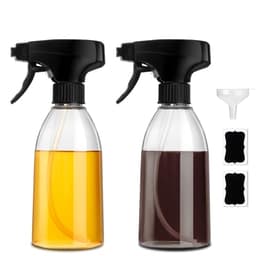
gmisun Refillable Oil Mister (2-Pack)
A refillable, food-grade mister. The whole seasoning technique is a thin, even coat, and this is the easiest way to get one without glugging oil onto a hot plate.
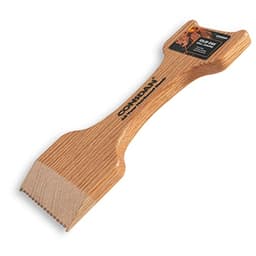
CONSDAN Solid Oak Wooden Grill Scraper
Solid oak that burns its own profile into shape on first use. No metal parts, nothing to shed — and a flat top needs scraping, not brushing.
$18.99 · View on AmazonPrice as of October 5, 2026. #ad How we’re funded
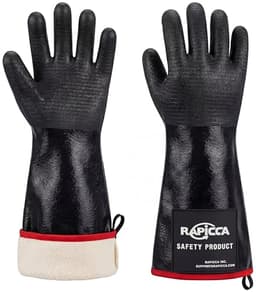
RAPICCA 14-Inch 932°F Heat-Resistant BBQ Gloves
Fourteen inches of 932°F-rated neoprene. A seasoning round means reaching over a plate running at max for half an hour, which is exactly when forearm coverage matters.
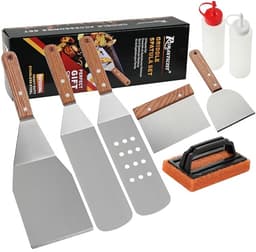
ROMANTICIST 8-Piece Professional Griddle Accessories Kit
Wide turners, a scraper, a chopper and squeeze bottles — the flat-top set rather than the grill set. Grill tongs are close to useless on a griddle.
$21.99 · View on AmazonPrice as of October 5, 2026. #ad How we’re funded
How to season a Blackstone griddle, step by step
- Wash it once. Soapy water poured gently over the plate, then rinsed with clean water. This is the only time soap belongs on the griddle.
- Run the burners on max for 10 to 15 minutes. Wait until the steel starts to brown — that is the signal it is hot enough.
- Wipe on a very thin layer of oil. Blackstone’s test: use the paper towel as if you are trying to wipe all the oil off. Include the walls of the plate.
- Let it smoke. Blackstone says it takes about 30 minutes for the plate to reach its smoke point, after which the griddle can be turned off.
- Repeat, 3 to 4 rounds total. Stop when the plate is dark brown.
- Cook on it, and oil it after each use. Cooking adds to the layer; Blackstone suggests its seasoning product or a non-stick spray between uses.
Mistakes to avoid
Too much oil. The most common error by a wide margin. Thick layers go tacky instead of hard.
Not enough heat. Oil has to pass its smoke point to bond. A gentle warm-up leaves you with a plate coated in oil, not seasoning.
Soap after the first wash. The initial wash removes manufacturing residue. After that, soap is working against the layer you just spent an afternoon building.
Leaving it uncovered. Water is what ruins a griddle. Blackstone’s answer is a heavy-duty cover, and a hood on its own is not the same thing.
Wire bristles. There is nothing for them to do on a flat surface except leave wire behind. Our bristle-free brush and scraper roundup covers the alternatives.
Which griddle is worth seasoning in the first place
If a griddle is still a purchase rather than a possession, the size decision matters more than the brand. Our Blackstone 22 vs 28 comparison sets out what the extra plate actually buys, and the flat top griddle roundup compares eight of them on published cooking area, zones and whether a lid is included. If a griddle is competing with a grill for the same money, read charcoal grill vs flat-top griddle first.
Frequently asked questions
How do you season a Blackstone griddle for the first time?
Wash the new plate once with soapy water and rinse it. Turn the burners to max and preheat 10 to 15 minutes until the steel browns. Wipe on a very thin layer of oil — Blackstone says use the paper towel as if you are trying to wipe all the oil off — and let it smoke; Blackstone says the plate takes about 30 minutes to reach its smoke point. Repeat for 3 to 4 rounds until the plate is dark brown.
How many times should you season a new griddle?
Blackstone's guide gives 3 to 4 rounds for the initial seasoning, and says to keep going until the griddle plate is dark brown. After that, cooking on it keeps adding to the layer.
What oil is best for seasoning a Blackstone?
Blackstone recommends its own Griddle Seasoning & Cast Iron Conditioner, and its guide also lists canola, flax, vegetable, shortening and olive oil as options. It does not publish smoke points for them. What matters more is that the layer is very thin and the plate gets hot enough.
How much oil do you use to season a griddle?
Far less than people expect. Blackstone's instruction is to wipe the oil with a paper towel as if you are trying to remove all of it — the plate should look barely damp rather than glossy. Thick puddles do not turn into seasoning; they turn tacky.
Why is my Blackstone sticky after seasoning?
Almost always too much oil, not enough heat, or both. A thick layer cooks on the surface and stays oily underneath, which is what feels tacky. The fix is to heat the plate properly and run another round with a much thinner coat.
Can you use soap on a Blackstone griddle?
Only for the very first wash, before any seasoning exists, to remove manufacturing residue — that is step one in Blackstone's own guide. After the plate is seasoned, soap works against the layer you built. Scrape while warm and wipe instead.
Does food stick to a newly seasoned griddle?
It can for the first couple of cooking sessions, and that is normal rather than a sign of failure. Keep cooking and keep oiling before and after each use; as the plate builds layers the seasoning evens out.
How do you stop a griddle rusting?
Keep water off it. Blackstone's advice is a heavy-duty cover to protect the plate from the weather, and a hood on its own is not a substitute. If surface rust does appear, scrape it back to steel and run the seasoning routine again.
Sources
- Blackstone — How to Season Your Griddle: Complete Guide — Soapy water once before the first cook, burners on max for 10-15 minutes until the plate browns, oil wiped on so thin you are almost wiping it off, and 3 to 4 rounds until the plate is dark brown (accessed October 5, 2026)
- Blackstone — Omnivore Griddles — Maker's published cooking areas and heat-zone counts per Omnivore size, plus what the Omnivore plate's warp control, wind guards and efficiency claim cover (accessed September 24, 2026)
Keep reading
Blackstone 22 vs 28
Which griddle size to buy, on Blackstone's published figures.
Read the comparisonBest Flat Top Griddles
Eight flat tops from a 17-inch tabletop to a four-burner station.
See the griddlesGifts for Blackstone & Griddle Owners
Flat-top tools, not grill tools — turners, a press and a scraper.
See the giftsBlackstone 22-Inch Griddle Review
The tabletop griddle in full, including the seasoning learning curve.
Read the reviewBest Grill Brushes
Bristle-free cleaning — which matters even more on a flat surface.
See the brushesHow to Clean a Grill
The two-minute routine, and the shortcuts that cause damage.
Read the guide