What a flat top does that a grill cannot
The whole argument is contact. On a grate, food touches metal along a few thin lines and the rest of it cooks in hot air. On a griddle, the entire underside is pressed against hot steel, which is why a smash burger develops an edge-to-edge crust that a grill physically cannot produce.
It also opens up food that simply falls through a grate. Breakfast for a crowd — eggs, bacon, pancakes, hash browns, all at once on one surface. Fajitas with peppers and onions that stay where you put them. Fried rice. Philly-style steak and onions. Diced vegetables. Anyone who has watched half a pepper drop into the coals understands the appeal immediately.
The two burners matter more than they sound. Running one high and one low gives the same two-zone control a grill has: a searing side and a holding side, so the first batch stays warm while the second cooks.
The seasoning learning curve, honestly
A carbon-steel griddle is not non-stick out of the box. It has to be seasoned — thin layers of oil heated until they polymerize into a slick, dark surface — and then maintained with a light wipe of oil after each cook. Done properly, it becomes better with age and eggs slide around on it. Ignored, it goes patchy and can develop surface rust after a wet winter in the garage.
This is the single biggest reason a flat top lands badly as a gift. It asks for a small ritual, and the recipient has to be the kind of cook who enjoys that. Someone who already keeps a cast-iron pan will be delighted. Someone who puts everything in the dishwasher will not.
What you give up versus a grill
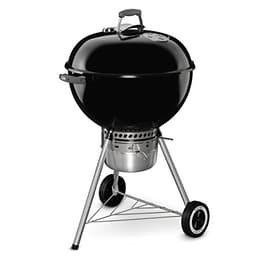
Grill marks and smoke. There is no fire underneath, no fat dripping onto coals, no smoke curling up into the food. A griddle steak is a very good pan-seared steak, which is not the same thing as a grilled one and never will be. If the person you are buying for loves the smell of charcoal, a flat top will not replace that — our charcoal grill vs griddle comparison lays the two side by side.
You also give up the lid as an oven. The hood on this model is for storage, wind and steaming a cheese slice — not for holding a whole chicken at 350°F for an hour. Anything that needs to be cooked through by ambient heat still belongs on a grill.
Why the tabletop size is usually the right one to give
The large four-burner Blackstones on carts are wonderful and they are also furniture. As a gift, a permanent piece of yard equipment is a bigger imposition than people realize — it needs a place to live and a cover.
The 22-inch tabletop version sidesteps all of that. It sits on an existing table or a workbench, it comes to the campsite or the tailgate, and it goes back in the garage when it is done. Twenty-two inches is still enough to cook for four to six people comfortably, which covers most of the reasons anyone wants a flat top in the first place.
Who this is for
The cook who has grilled everything. They have the kettle, the tools, the thermometer, and they are bored. A flat top is the gift that adds a genuinely new menu rather than a slightly better spatula — the same logic behind our gifts for grill masters shortlist.
It is also excellent for people who feed groups: big families, camping trips, tailgates. A griddle turns cooking breakfast for eight from three rounds in a frying pan into one batch.
Who should get something else
Someone who does not already own a grill. A flat top is a second cooker, not a first one, and giving it to a person with no grill leaves them unable to make the food most people actually want in a backyard. Start with a first grill instead.
And anyone who will not maintain it. This is the one big-ticket grilling gift where a disengaged owner produces a genuinely worse object over time.
What to give alongside it
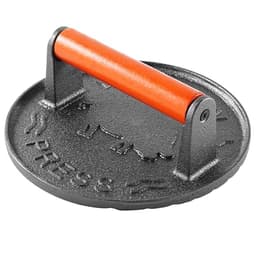
A bottle of high-smoke-point oil and a griddle scraper are the two things it needs on day one. A burger press is the obvious accessory since smash burgers are the headline act, and a pair of long heat glovesmakes moving a hot tabletop unit around a great deal less exciting. For someone who already owns the griddle, the full list of flat-top-specific gifts — and the grill gear that does not fit one — is in our gifts for Blackstone and griddle owners. And if 22 inches sounds too small for how they cook, our best flat top griddles guide compares this tabletop against the 28 and 36-inch four-burners.