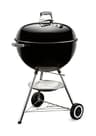
The kettles, feature by feature
| | Original Kettle 22 | Original Kettle Premium 22 | Master-Touch 22 | Jumbo Joe 18 |
|---|
| Cooking area | 363 sq in | Same 22 in bowl | 443 sq in total, incl. 80 sq in warming rack | 18 in grate |
| Lid thermometer | Not listed | Built in | Built in | Not listed |
| Ash handling | One-Touch cleaning | One-Touch plus enclosed high-capacity ash catcher | One-Touch plus ash catcher | One-Touch cleaning |
| Hinged grate | No | No | Yes — flips up on two sides | No |
| Char-rails for two-zone | No | No | Yes | Bank coals by hand |
| Lid storage | Lid hook | Lid hook | Tuck-Away lid holder | Lid lock for carrying |
| Warranty | 10 years, bowl and lid | Weber kettle warranty | Weber kettle warranty | Weber warranty |
| Portable | No | No | No | Yes, two-hands carry |
Where Weber does not publish a figure for a given model we say so rather than carry a number across from a different kettle. Prices sit on the buttons above.
The two features that change how you cook
Most of the differences here are conveniences. Two are not.
The hinged grate is the first. On a plain kettle, adding charcoal halfway through a cook means lifting food off the grate, lifting the grate out, topping up and putting it all back. On the Master-Touch, two sections flip up so you can drop coals straight in. On a twenty-minute burger cook that is irrelevant. On a three-hour rack of ribs it is the difference between a smooth cook and a scramble.
The char-rails are the second. They hold the coals against one side of the bowl, which is how you build and keep a genuine two-zone fire — hot on one side, cool on the other. You can do the same thing on any kettle by banking coals by hand or using charcoal baskets; the rails just mean the fire stays where you put it. Our direct vs indirect heat guide explains why that arrangement matters more than anything else on a charcoal grill.
The thermometer is worth less than it looks
A built-in lid thermometer is the headline difference between the plain Original Kettle and the Premium, and it is the one we would weigh least. It tells you the air temperature at the top of the dome, which is useful for low-and-slow cooking and tells you almost nothing about the food. Doneness is an internal-temperature question, and the USDA is explicit that color is not a reliable test — a thermometer in the meat is. A clip-on dome thermometer costs very little if you want the dome reading on a cheaper kettle.
So if the choice between the Original and the Premium comes down to the thermometer alone, buy the cheaper kettle and an instant-read thermometer with the difference. The enclosed ash catcher is the better argument for the Premium: it keeps ash contained instead of in an open pan under the grill, which matters on a windy patio.
What to spend the difference on instead
For a first charcoal grill, two cheap things do more for the food than any feature on this page. A chimney starter lights coals in about twenty minutes with no lighter fluid and no chemical taste, and an instant-read thermometer ends the guessing. Both together cost a fraction of the step up to a Master-Touch. Our guide to lighting a charcoal grill is the five-minute version.
So which should you buy?
Buy the Original Kettle Premium as the default. It is the kettle most households should own, with the ash catcher and the thermometer, and it is our top pick in the charcoal grill roundup and the subject of our full kettle review.
Buy the Master-Touch for somebody who already cooks on charcoal most weekends and does long cooks — the hinged grate, char-rails and warming rack are exactly the things those cooks improvise around for years.
Buy the plain Original Kettle when the budget stops short: it cooks identical food, and the saving covers a chimney and a thermometer. Buy the Jumbo Joe if the problem is space rather than money — 18 inches of grate, a lid lock and a carry handle, for a balcony or a car.
Comparing charcoal against something else entirely? Kamado vs kettle covers the insulated route, and gas vs charcoal settles the bigger argument first.