What the Premium adds over the plain kettle
Weber sells several 22-inch kettles that look nearly identical, and the differences are small but genuinely useful. The Premium version adds a hinged cooking grate, so you can add charcoal mid-cook without lifting a grate full of food; a lid thermometer, so the cook has some idea of the temperature inside without opening it; and the One-Touch cleaning system with an enclosed ash catcher, which sweeps ash into a removable aluminum bin instead of a shallow open pan.
None of those is life-changing on its own. Together they remove the three most annoying parts of charcoal grilling: topping up fuel, guessing the temperature, and dealing with ash. For a gift, that matters more than it would for someone buying for themselves, since a recipient who finds the grill fiddly simply uses it less.
Why a kettle still beats most grills at this money
A kettle does two jobs that most gas grills at the same price do badly. It gets genuinely hot for searing, because charcoal radiates more heat than a mid-range gas burner. And with the coals banked to one side and the lid on, it holds a low, steady indirect temperature well enough to cook a whole chicken or ribs — something a small gas grill struggles with.
That range is the actual argument for the kettle as a gift. It is not the most convenient grill, but it is close to the most capable one at the price, and a cook grows into it rather than out of it. Our steak guide and the BBQ vs grilling explainer both describe the two-zone setup this grill is built around. For the low-and-slow side of that range, our guide to smoking on a charcoal grill uses Weber’s own kettle method, and kamado vs kettle explains when an insulated cooker is worth the extra.
The honest downsides
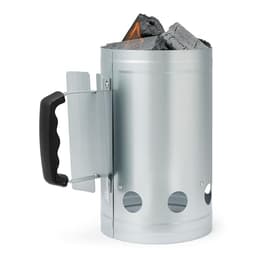
It is charcoal, and charcoal is effort. Lighting takes fifteen minutes before anything goes on the grate, and there is ash to deal with afterwards. Someone who grills on a weeknight after work may quietly resent that. A chimney starter cuts the effort down to something reasonable and costs very little, which is why we would never give a kettle without one.
There is no side table and no storage. The Premium is a bowl on three legs. Everything — platters, tools, sauce — goes on the ground or on a table you already own. Buyers coming from a gas grill with wings and a cabinet notice this immediately.
Temperature control is a skill, not a dial. The vents work well once someone understands them, but there is a learning period where the fire runs hotter or colder than intended. That is fine for a curious cook and frustrating for someone who wanted dinner handled.
It is a big-ticket gift with a delivery footprint. Assembly is straightforward but it is a bulky box, and it is not the kind of thing you can quietly return if it lands badly.
Who to buy it for
Someone whose grill has visibly given up, or someone moving into a first house with a yard. It is also the strongest gift on this site for a person who has said out loud that they want to learn to cook over fire — a kettle rewards that curiosity for years, and every technique guide and video online assumes one.
Buy it as a group gift where you can. The price is high enough that pooling several people’s budgets is normal, and it removes the awkwardness of a single present that outclasses everything else under the tree.
Who should get something else
Anyone in an apartment, on a balcony with a charcoal ban, or with nowhere to store a large round grill through the winter. A portable gas grill fits those constraints far better — see the beginner grill roundup.
And anyone who already owns a working grill. Replacing a functioning appliance is one of the least satisfying gifts you can give, no matter how good the replacement is. For that person, the money is far better spent on the upgrades and showpieces that a grill owner would not buy for themselves.
What to give alongside it
A chimney starter, a pair of long heat gloves, and a bag of charcoal make the difference between a grill that gets used on day one and a grill that waits for a shopping trip. Add a thermometer if they do not already own one; the lid gauge tells you about the air inside the kettle, not about the food.