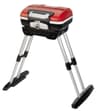
The head-to-head
| | Charcoal kettle | Portable gas |
|---|
| Ready to cook in | 20–30 minutes | 3–5 minutes |
| Roughly feeds | 6–8 | 2–3 |
| Peak searing heat | Very high | Moderate |
| Two-zone cooking | Easy — bank the coals | Limited by size |
| Cleanup | Ash, every few cooks | Grate only |
| Running cost | Charcoal per cook | Propane canisters |
| Travels | No | Yes |
| Allowed on most balconies | Often not | Sometimes |
The question that actually decides it
Not “which tastes better?” but “how often will they cook on a weeknight?”
Charcoal costs half an hour before the food goes on. On a Saturday that half hour is part of the pleasure — lighting a fire, waiting for the coals to ash over, having a drink while it happens. On a Wednesday at 6:30pm with hungry people in the house, it is the reason the grill stays covered and dinner gets made indoors.
Someone who will only ever grill at weekends should be given charcoal; the ritual is the point and they have time for it. Someone who wants to grill often, quickly, should be given gas, even though the food will not be quite as good, because a grill that gets used twice a week beats a better grill used twice a month.
Where the flavor difference actually comes from
Two things, and only one of them is smoke. The first is heat: burning charcoal reaches temperatures a small propane burner cannot, and a hard sear produces browning that a gentler heat does not. That is the bigger effect, and it is why steak in particular is so much better on charcoal.
The second is what happens when fat drips. On charcoal, fat hits hot coals, vaporizes, and rises back through the food. On gas it hits metal bars, and the effect is weaker. Neither is really “smoke flavor” in the barbecue sense — that requires wood and hours. Our gas versus charcoal guide goes through the full argument.
Where the portable gas grill wins outright
Three situations, and in each of them it is not a compromise but the correct answer.
Restricted spaces. A lot of apartments ban charcoal on balconies outright. A small gas grill is often permitted where a kettle is not, which makes it the only workable gift. See gifts for apartment grillers.
Cooking away from home. Camping, tailgating, a beach, a holiday rental. A kettle does not travel; this does. Our portable grill roundup covers the whole category.
Cooking for one or two. Lighting a full chimney of charcoal to cook two burgers is a waste of fuel and time. Small households genuinely are better served by gas.
Where the kettle wins outright
Capacity is the obvious one — a twenty-two inch grate cooks for six to eight people, and no tabletop grill comes close. But the more interesting advantage is versatility.
A kettle with the coals banked to one side is a two-zone cooker, which means it can roast a whole chicken, cook thick bone-in pieces gently, and hold a low temperature for hours with a handful of wood chips. A small single-burner gas grill can do one thing: cook thin food quickly over direct heat. The kettle is a more capable machine by a wide margin, and it costs less. Our Weber kettle review covers it in full.
The answer for most gift buyers
If they have outdoor space they own and they enjoy cooking, give charcoal. It is the better machine, it is cheaper, it makes better food, and the ritual is most of the appeal for people who take grilling seriously.
If they rent, live in an apartment, travel, cook for one or two, or have ever described cooking as something to get done rather than something to enjoy, give gas. And if you genuinely cannot tell, do not guess at a grill — a thermometer or a tool set works on both, and neither becomes an expensive object they have to find room for.