How to Grill Frozen Burgers
You can cook them straight from the freezer. It takes longer, it needs a two-zone fire, and the only thing that tells you they are done is 160°F.
Quick answer
Frozen patties go straight on — no thawing required. Set up a two-zone fire at medium heat, season them on the grate, and cook with the lid down, allowing roughly half again as long as fresh patties. Flip every few minutes, move them to the cooler side if they flare, and take them off when a thermometer reads the USDA’s 160°F minimum for ground beef— which is the only reliable test, because color is not one.
A freezer full of patties is the most common weeknight grilling situation there is, and the advice people are usually given — thaw them first — is the advice they ignore. The good news is that it is not required. Cooking ground beef from frozen works, as long as you accept the two consequences: it takes longer, and you have less margin for error on heat.
The one thing that is not negotiable is the finish temperature. Ground beef has to reach 160°F throughout, per the USDA’s safe minimum chart, and the USDA is equally clear that color is not a reliable doneness test — a burger can brown through and still be under temperature. A thermometer is the whole game here.
Why frozen patties behave differently
- The surface wants to cook before the middle thaws. That is why high direct heat burns a frozen burger: the outside is charring while the centre is still below freezing. Medium heat and a closed lid fix it.
- They release water. Surface ice melts and steams, which delays browning for the first few minutes. Do not fight it; the crust arrives once that water is gone.
- Seasoning will not stick to ice. Salt and pepper the tops once the surface is wet rather than frosty, then do the other side after the first flip.
- They are more fragile early on. Do not try to move them for the first few minutes or they will tear. Wait until they release from the grate.
The method
- Build two zones at medium heat. Half the coals banked to one side, or one burner off. Our direct vs indirect guide covers the arrangement, and how much charcoal to use gives Kingsford’s quantity for a two-zone fire: about half to one chimney.
- Separate the patties. If they are frozen in a stack, run cold water over the edge or slide a thin spatula between them. Never pry them apart over the grill.
- Put them over the direct side and close the lid. Three to four minutes and leave them alone. The lid is doing most of the work: a closed lid cooks the patty from all sides at once, which is exactly what a frozen middle needs.
- Flip, season the second side, and keep going. Flip every three or four minutes rather than once. Frequent flipping is genuinely better here — it heats both faces evenly instead of blasting one.
- Move them to the cool side to finish. Once they are browned and thawed through, the indirect side brings the centre up without burning the crust. This is also where you go if the fat starts a flare-up: Weber’s own advice is to move food over indirect heat until the flames die down, then move it back.
- Check with a thermometer, in the side. Insert horizontally into the middle of the thickest patty. 160°F throughout and they are done.
- Cheese last, lid down for a minute. Everything else is a bun decision.
Expect roughly 50% longer than the same patties fresh. We are not going to publish a minutes-per-side table, because patty thickness, grill type and how cold the patties are change it completely — and a wrong number here is a food-safety problem, not an inconvenience. The thermometer is the timer.
Three rules that matter more with frozen burgers
Never press the patty. Pressing squeezes out the fat and juice that are keeping a frozen burger from drying out, and it feeds the flare-up. A press belongs on a flat-top with fresh beef — see how to grill burgers for the smash-burger case, which is the opposite technique.
Clean grate, hot grate, then food. Frozen patties stick harder than fresh ones. Preheat properly and scrape the grate before anything goes on.
160°F or nothing. Whole cuts of beef are safe at 145°F because bacteria are on the surface; ground beef mixes that surface through the whole patty, which is exactly why the USDA sets it higher. There is no medium-rare frozen burger.
What to look for in the gear
Three criteria, straight out of the method. A thermometer fast and thin enough to read the middle of a patty from the side without draining it — this is the one piece of kit the cook genuinely cannot skip. A stiff spatula with a thin front edge that slides under a stuck frozen patty without folding it. And, if smash burgers on a flat top are the other half of this household’s burger life, a heavy press — used on fresh beef, never on these.
What a frozen-burger cook actually needs
Picks from our shortlists, matched to the criteria above: a fast read, a stiff turner, and the press for the fresh-beef nights. Prices are fetched live.
How this is funded: we earn a commission if you buy through our links, at no extra cost to you. It never changes which gift we recommend, and we’ll tell you when we’d skip one. Full disclosure.
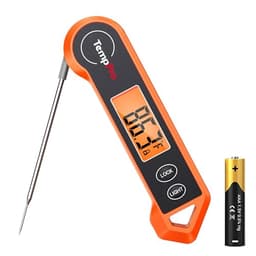
TempPro TempSwift PLUS TP19H Instant-Read Thermometer
Roughly a three-second read from a 4-inch probe thin enough to go in the side of a patty. The only thing that reliably tells you a frozen burger has reached 160°F.
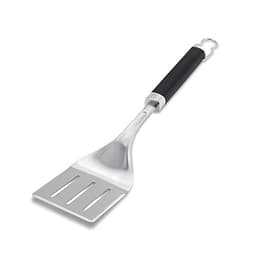
Weber Precision Grill Spatula
A stiff stainless blade that slides under a stuck patty without folding it - the failure mode of every flexible supermarket spatula.
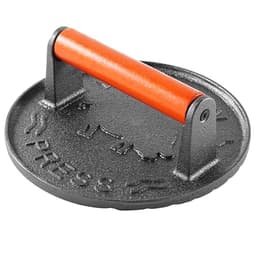
SanKonfu Cast Iron Burger & Bacon Press
Seven inches of cast iron for the smash-burger nights on a flat top. Use it on fresh beef, never to squeeze a frozen patty on the grate.
$17.99 · View on AmazonPrice as of October 24, 2026. #ad How we’re funded
For fresh patties and the full burger method, read how to grill burgers. For the surface that handles burgers best of all, the two Blackstone sizes are the usual decision, and best flat-top griddles has the full shortlist.
Frequently asked questions
Can you grill burgers from frozen?
Yes. Frozen patties go straight on the grate - no thawing needed. Use medium two-zone heat rather than high heat, keep the lid down, flip every few minutes, and allow roughly half again as long as fresh patties. Finish at the USDA's 160F minimum for ground beef.
How long do frozen burgers take on the grill?
Plan on about 50% longer than the same patties fresh, but cook to temperature rather than to a clock: thickness, grill type and how cold the patties are all change it. Ground beef is done at 160F throughout, and the USDA notes color is not a reliable test.
Do you thaw burgers before grilling?
You do not have to. Thawed patties brown faster and are easier to season and handle, so they are slightly better if you have the time. If you do not, cooking from frozen works fine - the only adjustments are lower heat, a closed lid and more time.
What temperature should frozen burgers be cooked to?
160F throughout, the USDA's safe minimum for ground beef. That applies whether the patty started frozen or fresh. Check by inserting the thermometer horizontally into the side of the thickest patty, into the middle.
Why do frozen burgers stick to the grill?
Surface ice melts into water, which delays browning and makes the patty cling to the grate until a crust forms. Preheat the grill properly, scrape the grate clean, and do not try to move the patties for the first few minutes - wait until they release on their own.
Should you press frozen burgers down on the grill?
No. Pressing forces out the fat and juice that stop a frozen patty drying out, and the dripping fat causes flare-ups. Pressing belongs to smash burgers on a flat-top griddle with fresh beef, which is a different technique with a different goal.
Sources
- USDA FSIS — Safe Minimum Internal Temperature Chart — The USDA's official safe minimum internal cooking temperatures for beef, poultry, pork and more (accessed July 21, 2026)
- USDA FSIS — Doneness Versus Safety — USDA on why color is not a reliable doneness test and a thermometer is (accessed July 21, 2026)
- USDA FSIS — Grilling Food Safely — USDA guidance on safe grilling, thermometer use and avoiding cross-contamination (accessed July 21, 2026)
- Weber - Preventing Flare-Ups — Weber's own prevention list: trim excess fat from the meat, wipe the grease catch-pan clean of accumulated fats and oils, and cook with the lid down because a flare-up is unlikely when oxygen is limited. Most charcoal flare-ups begin within a few seconds of putting food on or turning it over; if flames get out of control, move the food over indirect heat until they die down, then move it back. Weber notes gas flare-ups are less common on its grills because the angled Flavorizer bars cover the burner tubes and direct grease into the catch-pan. Read via live web search of that exact URL on 2026-10-17 (accessed October 17, 2026)
Keep reading
How to Grill Burgers
The fresh-patty method, and why ground beef has its own safety rule.
Read the guideDirect vs Indirect Heat
The two-zone setup a frozen patty needs.
Read the guideGrill Lid: Open or Closed?
Why the lid does most of the work on a thick or frozen patty.
Read the guideBest Grill Spatulas
The stiff turners that get under a stuck patty without folding it.
See the picks