Do You Grill With the Lid Open or Closed?
Lid down for almost everything. Lid up only for thin, fast food you are watching. The rule, the exceptions, and what each lift of the lid costs you.
Quick answer
Close the lid for almost everything. A closed lid turns the grill into an oven, cooks food through without burning the outside, and limits oxygen — which Weber notes makes a flare-up unlikely. Grill with the lid openonly for thin, fast food you are standing over: smash burgers, thin steaks, shrimp, sliced vegetables — anything done in under about five minutes a side.
The lid is not a cover. It is the difference between two completely different cooking methods, and almost every “burnt outside, raw inside” dinner is a lid decision rather than a heat problem.
Lid up is direct radiant grilling: heat hits the side of the food facing the fire, and the rest of it cooks by conduction from there. That works beautifully for food thin enough to cook through before the outside burns. Lid down is convection: hot air circulates around the food and cooks it from every side at once, like an oven with smoke in it. Anything thick needs that.
The rule, by food
| Food | Lid | Why |
|---|---|---|
| Smash burgers, thin steaks, shrimp, sliced vegetables | Open | Cooks through in minutes; you want crust, not convection |
| Thick steaks, chops, bone-in chicken | Closed (after the sear) | Sear over the hot zone, then close the lid to finish the middle |
| Burgers over an inch, sausages, brats | Closed | Even heat all round means the middle is safe before the outside chars |
| Whole chicken, ribs, roasts, anything indirect | Closed throughout | Indirect cooking only works with the lid trapping the heat |
| Anything smoked | Closed throughout | No lid, no smoke — it just blows away |
| Fish on a plank or in a basket | Closed | Gentle, even heat; less handling means less breakage |
That is a judgement about cooking, not a food-safety claim. The safety rule is a number, not a lid position: the USDA’s safe minimums are 160°F for ground beef, 165°F for all poultry and 145°F for whole cuts of beef and pork with a three-minute rest.
What a lid lift costs you
Every time the lid comes off, the hot air you have built up leaves and the temperature has to climb back. Weber puts the cost of an opening in cold weather at 5 to 7 minutes, which is the clearest published figure we have seen on it — and it is why its own advice is simply that looking is not cooking.
On a charcoal grill there is a second cost: the gust of oxygen that comes with the lid off makes the fire surge, then sag. That is both a flare-up risk and a temperature swing. See charcoal grill vents for how the airflow side of this works.
Lid down also means fewer flare-ups
Weber’s own flare-up guidance is explicit: cook with the lid down, because a flare-up is unlikely when oxygen is limited. If flames do get out of control, move the food over indirect heat until they die down, then move it back. Our flare-up guide covers the rest of the prevention list.
What about gas versus charcoal?
The rule is the same, but the consequences differ. On gas, a closed lid is how you get the grill up to temperature at all — preheat with the lid down, every time. On charcoal, a closed lid plus vent settings is your entire temperature control. On a flat-top griddle there is usually no lid to argue about, which is part of why griddles are so forgiving for breakfast and smash burgers: grill vs griddle covers that trade.
The one habit that replaces lid-lifting
Stop looking and start reading. A thermometer answers the question the lid lift was asking — is it done? — without costing you any heat, and the USDA is blunt that color is not a reliable doneness test. For long cooks a leave-in probe means the lid stays shut from start to finish.
What to look for in the gear
Two criteria, and they follow directly from the above. First, a fast instant-read for weeknight cooking: you want a number in a few seconds, from a probe thin enough not to drain the juice out of a steak. Second, for anything that takes more than half an hour, a leave-in probe that reports without the lid coming off at all — ideally one that reads the pit temperature as well as the meat, so you can see what the grill is doing.
Two thermometers that end the lid-lifting
Picks from our shortlists, matched to the criteria above: one fast instant-read, one leave-in. Prices are fetched live.
How this is funded: we earn a commission if you buy through our links, at no extra cost to you. It never changes which gift we recommend, and we’ll tell you when we’d skip one. Full disclosure.
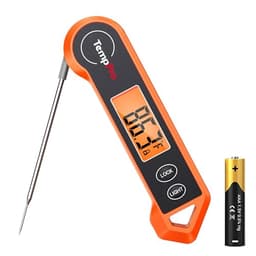
TempPro TempSwift PLUS TP19H Instant-Read Thermometer
A roughly three-second instant-read for weeknight cooking - the quickest way to answer 'is it done' without opening the lid for a look.
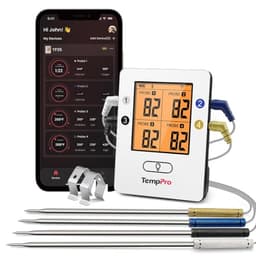
TempPro TempSync PRO TP25 4-Probe Bluetooth Thermometer
Four probes and long-range Bluetooth: meat, meat and grate temperature at once, so a long cook needs the lid lifted exactly never.
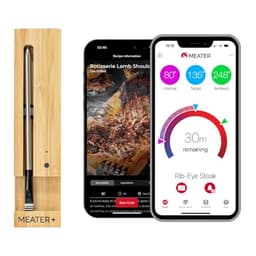
MEATER Plus Wireless Smart Meat Thermometer
A fully wireless leave-in probe with no cable through the lid gasket, which is the tidiest option on a kettle where the lid has to seat flush.
For where the probe tip actually goes in each cut, read how to use a meat thermometer, and for the two-zone setup that makes lid-down cooking work on any grill, see direct vs indirect heat.
Frequently asked questions
Do you grill with the lid open or closed?
Closed for almost everything. A closed lid circulates hot air and cooks food through without burning the outside, and it limits the oxygen that causes flare-ups. Leave the lid open only for thin, fast food you are standing over - smash burgers, thin steaks, shrimp, sliced vegetables.
Should you grill burgers with the lid open or closed?
Thin smash-style patties, lid open - they are done in a couple of minutes a side and you want crust. Thicker patties over an inch, lid closed after the first sear so the middle reaches the USDA's 160F for ground beef before the outside chars.
Does closing the grill lid make it cook faster?
Usually yes, for anything thick. A closed lid traps hot air so food cooks from all sides at once instead of only the side facing the fire. For thin food it makes little difference to speed and can overcook the middle before you get a crust.
Why does my grill flare up when I open the lid?
Opening the lid feeds the fire a gust of oxygen, and dripping fat does the rest. Weber's own guidance is to cook with the lid down because a flare-up is unlikely when oxygen is limited, and to move food to indirect heat if flames do get out of control.
Should the lid be closed when preheating?
Yes, on gas and charcoal alike. The grill will not reach temperature with the lid open, because the heat simply leaves. Weber's cold-weather guidance is to preheat to 500F and to expect it to take longer when it is cold outside.
How much heat do you lose opening the grill?
Enough to matter: Weber's cold-weather figure is 5 to 7 minutes of cooking time per lid opening. On a long cook that adds up to an hour or more, which is the single best argument for a leave-in thermometer over lifting the lid to look.
Sources
- Weber - Lookin' Ain't Cookin' — Weber's case for grilling with the lid down: the lid keeps heat in and oxygen limited, which both cooks food evenly and makes a flare-up unlikely; every lift of the lid costs cooking heat. Read via live web search of that exact URL on 2026-10-17 (accessed October 17, 2026)
- Weber - Preventing Flare-Ups — Weber's own prevention list: trim excess fat from the meat, wipe the grease catch-pan clean of accumulated fats and oils, and cook with the lid down because a flare-up is unlikely when oxygen is limited. Most charcoal flare-ups begin within a few seconds of putting food on or turning it over; if flames get out of control, move the food over indirect heat until they die down, then move it back. Weber notes gas flare-ups are less common on its grills because the angled Flavorizer bars cover the burner tubes and direct grease into the catch-pan. Read via live web search of that exact URL on 2026-10-17 (accessed October 17, 2026)
- Weber — 5 Tips for Grilling in the Cold — Allow extra time for the grill to reach temperature (preheat to 500°F); each time the lid is opened it adds 5 to 7 minutes; keep the grill and the pathway to it free of snow; close all vents on charcoal models when finished (accessed October 11, 2026)
- USDA FSIS — Safe Minimum Internal Temperature Chart — The USDA's official safe minimum internal cooking temperatures for beef, poultry, pork and more (accessed July 21, 2026)
- USDA FSIS — Doneness Versus Safety — USDA on why color is not a reliable doneness test and a thermometer is (accessed July 21, 2026)
Keep reading
Direct vs Indirect Heat
Burnt outside and raw inside is an arrangement problem, not a heat problem.
Read the guideHow to Stop Grill Flare-Ups
Weber's own prevention list, and what to do when flames are already up.
Read the guideHow to Use a Meat Thermometer
Where the tip goes in every cut, and the ice-water accuracy test.
Read the guideBest Meat Thermometers
The one tool that turns grilling guesswork into a number.
See the picks