How to Stop Grill Flare-Ups
Flare-ups are fat meeting fire. Trim it, clean the grease out, cook with the lid down, and keep a cool zone to move food to.
Quick answer
Prevent flare-ups by doing three things Weber recommends on its own flare-up page: trim excess fat from the meat, wipe the grease catch-pan clean of accumulated fats and oils, and cook with the lid down, because a flare-up is unlikely when oxygen is limited. When flames do get out of control, move the food over indirect heat until they die down, then move it back. Never pour water on a grease fire.
A flare-up is simple physics with an unhelpful sense of timing. Fat renders out of the food, drips onto something hot, vaporizes and ignites. Weber notes that most flare-ups on a charcoal grill begin within a few seconds of putting food on, or right after you turn it over — which is exactly when you are least able to do anything about it.
A little flame is not a disaster: a brief lick of fire is part of how grilled food tastes grilled. A sustained one is a problem, because it deposits soot, turns fat bitter and chars the outside of food that is still raw in the middle.
The four causes, in order
- Fat on the food. Fatty cuts, skin-on chicken and marinades heavy with oil are the main source. Weber’s own first prevention tip is to trim the excess fat before cooking.
- Fat already in the grill. Last week’s drippings in the catch-pan or on the grease tray are fuel waiting for a spark. Weber’s second tip is to wipe the catch-pan clean of accumulated fats and oils.
- Too much oxygen. Lid off and vents wide feeds any flame. Lid down limits oxygen, which is why Weber calls a flare-up unlikely with the lid closed.
- No cool zone. If every square inch of the grate is over fire, there is nowhere to move the food to. That is a setup problem, and it is the one that turns a flare-up into a ruined dinner.
Prevention: the routine that works
Trim, and dry. Take the thick fat cap down to a few millimetres, pat marinated food so it is not dripping oil, and score what you leave so it renders rather than curls.
Clean before you cook, not after. Burn off the grate while it preheats, then scrape it. Empty the ash from a charcoal bowl and wipe the grease tray on a gas grill — both of those are flammable deposits, not just mess. Our cleaning guide has the two-minute routine.
Build two zones. Bank the coals to one side, or leave one burner off. That gives you a parking space, which is the single most useful thing you can have when flames come up. See direct vs indirect heat.
Cook with the lid down. It limits oxygen and it stops you hovering. Our lid guide covers when to break that rule.
When flames are already up
| Do this | Not this |
|---|---|
| Move the food to the cool zone until the flames die, then move it back | Stand there and hope |
| Close the lid to starve the flame of oxygen | Fan it with the lid or a tray |
| On charcoal, close the bottom vent briefly to cut the air supply | Pour water on it — water spreads burning grease and can flash into steam |
| On gas, turn the burners under the flare down or off and leave the lid up a moment if flames are at the hood | Squirt the grate with oil spray anywhere near flame |
| Keep baking soda or a Class B/K extinguisher within reach for a real grease fire | Use a flour or water-based attempt on burning fat |
That table is our ordering of the practical steps; the move-to-indirect instruction and the lid-down advice are Weber’s own. For a fire that has gone beyond a flare-up, the answer is the fire service, not a technique.
Gas, charcoal and griddles are not equally prone
Weber points out that flare-ups are less common on its gas grills because the angled Flavorizer bars sit over the burner tubes and direct grease into a catch-pan under the cookbox — the fat never reaches an open flame. Charcoal has no such barrier: drippings land straight on live coals. A flat-top griddle, meanwhile, has no flame contact at all; grease runs to a trap, which is why a griddle is the calmest surface for bacon and smash burgers.
Foods most likely to flare
- Skin-on chicken thighs and whole birds — rendering skin fat is the classic cause.
- Fatty steaks and ribeyes, where the fat cap melts all at once.
- Sausages and brats, which split and release fat in a rush. Our brats guide cooks them indirect first for exactly this reason.
- Anything in an oily marinade, applied straight from the dish.
What to look for in the gear
The criteria come straight from the causes. You need a way to get burnt grease off the grate that will not leave wire bristles behind; long-handled tools so moving food off a flaming zone does not put your hand in the flame; and gloves with forearm coverage, because the instinctive reaction to a flare-up is to reach in with the wrong hand.
The gear that keeps flare-ups small
Picks from our shortlists, matched to the criteria above: a safe way to clean the grate, reach, and protected hands. Prices are fetched live.
How this is funded: we earn a commission if you buy through our links, at no extra cost to you. It never changes which gift we recommend, and we’ll tell you when we’d skip one. Full disclosure.
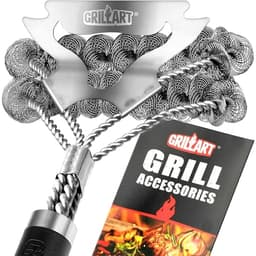
GRILLART Bristle-Free 18-Inch Grill Brush
A bristle-free coil brush: cleans burnt-on grease - the fuel for the next flare-up - with no loose wires to end up in a burger.
$22.99 · View on AmazonPrice as of October 24, 2026. #ad How we’re funded
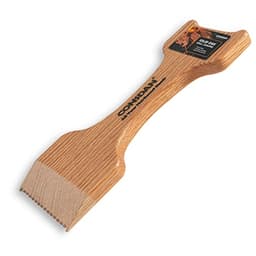
CONSDAN Solid Oak Wooden Grill Scraper
Solid oak that burns its own grooves to fit the grate. Zero metal parts, which is the whole argument for it over a wire brush.
$18.99 · View on AmazonPrice as of October 24, 2026. #ad How we’re funded
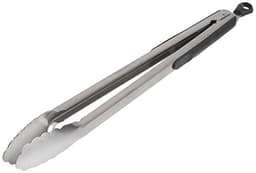
OXO Good Grips 16-Inch Locking Tongs
Sixteen inches of stainless with a cushioned grip - enough reach to move food off a flaming zone without putting your knuckles over it.
$21.00 · View on AmazonPrice as of October 24, 2026. #ad How we’re funded
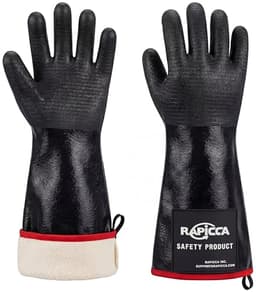
RAPICCA 14-Inch 932°F Heat-Resistant BBQ Gloves
Fourteen inches rated to 932°F. The reflex when flames come up is to reach in, and a short mitt is exactly the wrong thing to be wearing.
If flare-ups are a weekly event rather than an occasional one, the grate is usually the reason — best grill brushes covers the bristle-free options, and how to clean a grill has the deep-clean routine for the grease that has already built up.
Frequently asked questions
What causes grill flare-ups?
Fat. It renders out of the food, drips onto the coals or burner, vaporizes and ignites. Weber notes most charcoal flare-ups start within a few seconds of food going on or being turned over, and that accumulated fats and oils in the grease catch-pan are a second source independent of what you are cooking.
How do you stop a flare-up while cooking?
Move the food over indirect heat until the flames die down, then move it back - that is Weber's own instruction. Closing the lid helps by limiting oxygen, and on a charcoal grill briefly closing the bottom vent cuts the air supply. Never pour water on burning grease.
Does closing the lid stop flare-ups?
It makes them much less likely. Weber's flare-up guidance is to cook with the lid down because a flare-up is unlikely when oxygen is limited. It is not a guarantee - a lot of dripping fat on live coals will still flame - but it is the single easiest change.
Why does my gas grill flare up so much?
Usually grease in the cookbox rather than the food. Weber's own prevention step is to wipe the grease catch-pan clean of accumulated fats and oils; on Weber gas grills the angled Flavorizer bars are meant to keep drippings off the burner tubes, so persistent flare-ups often mean the bars or the tray need cleaning.
Should you spray water on a grill flare-up?
No. Water hitting hot grease can spread the burning fat and flash into steam. Move the food to a cool zone, close the lid, and cut the air supply. For a genuine grease fire, keep baking soda or a Class B or K extinguisher to hand - not a hose.
Which foods flare up the most?
Skin-on chicken, fatty steaks, sausages and anything straight out of an oily marinade. The fix is the same in each case: trim what you can, let marinade drip off before the food hits the grate, and cook over a two-zone fire so there is somewhere to move it.
Sources
- Weber - Preventing Flare-Ups — Weber's own prevention list: trim excess fat from the meat, wipe the grease catch-pan clean of accumulated fats and oils, and cook with the lid down because a flare-up is unlikely when oxygen is limited. Most charcoal flare-ups begin within a few seconds of putting food on or turning it over; if flames get out of control, move the food over indirect heat until they die down, then move it back. Weber notes gas flare-ups are less common on its grills because the angled Flavorizer bars cover the burner tubes and direct grease into the catch-pan. Read via live web search of that exact URL on 2026-10-17 (accessed October 17, 2026)
- Weber - Lookin' Ain't Cookin' — Weber's case for grilling with the lid down: the lid keeps heat in and oxygen limited, which both cooks food evenly and makes a flare-up unlikely; every lift of the lid costs cooking heat. Read via live web search of that exact URL on 2026-10-17 (accessed October 17, 2026)
Keep reading
Grill Lid: Open or Closed?
The lid position that limits oxygen - and the thin-food exception.
Read the guideDirect vs Indirect Heat
How to build the cool zone you move food to when flames rise.
Read the guideHow to Clean a Grill
The two-minute routine and the twice-a-year deep clean.
Read the guideBest Grill Brushes
Bristle-free brushes and scrapers, compared.
See the picks