Briquettes or lump: the only choice that really matters
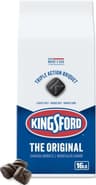
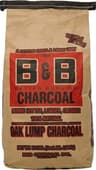
Everything else on this page is a detail. Briquettes are ground charcoal pressed into a uniform shape with a binder — B&B is unusually open about it and names a vegetable starch binder outright. Lump charcoal is wood that has been burned in the absence of oxygen until only carbon is left, then bagged in whatever shapes came out.
That difference drives all the others. Identical briquettes burn at a predictable rate, so a chimney-and-a-half of them behaves the same way this Saturday as it did last Saturday. Irregular lump lights faster, burns hotter and leaves far less ash, but a bag can contain a fist-sized chunk and a handful of dust, and the fire reflects that.
| | Briquettes | Lump |
|---|
| Consistency of the fire | High — uniform pieces | Variable — piece size differs within a bag |
| Time to cook on | About 15 minutes (Kingsford) | About 15 minutes (Cowboy, FOGO) |
| Ash left behind | More — Kingsford says “a moderate amount” | Noticeably less |
| Peak heat | Lower | Higher — 980°F+ (FOGO), 1,100°F+ (Jealous Devil) |
| Price per pound | Lowest | Several times higher |
| Contents published | Partly — B&B names its binder, Kingsford does not itemize | Yes — species named by FOGO and Jealous Devil |
The practical answer for most people: briquettes for anything that takes hours and needs a steady temperature, lump for a hot, fast cook where the extra heat shows up in the crust. Both of those are a real answer, and anybody who tells you one of them is simply wrong is selling something.
Bag weight is the spec nobody reads
Charcoal is sold at wildly different bag sizes — 8.8 lb, 10 lb, 16 lb, 17.6 lb and 35 lb all appear on this page — and comparing headline prices across those is meaningless. The only honest comparison is per pound, and that is how the picks above are ordered in our heads even though the live price on each button is whatever Amazon is charging right now.
The pattern is consistent: a supermarket-style briquette bag is the cheapest fuel per pound by a wide margin, a small bag of flavor-grade lump costs several times more, and the big premium bags land somewhere in between because the volume brings the per-pound cost back down. If someone grills every weekend, the 35 lb bags are the only ones that make arithmetic sense; if they grill four times a summer, the small bag they can store indoors is worth the premium.
What a maker publishes tells you more than what it claims
Read the six cards above and a pattern emerges. The brands with something to prove publish numbers: Cowboy gives a USDA heat-treatment protocol with a temperature and a duration; FOGO states that about 80% of the bag is pieces four inches or longer; Jealous Devil names its species, quebracho blanco, and gives separate burn times for an open fire and a sealed cooker; B&B names its binder and rates a bag in uses.
The gaps are just as informative. B&B says “High BTU” without a BTU figure. FOGO publishes no burn time at all, which is the number a smoker actually cares about. Jealous Devil quotes two different maximum temperatures on its own website. None of that makes the charcoal bad — it means the marketing is ahead of the data sheet, which is normal in a category where nobody is required to publish anything.
The instant-light trap
Every brand here also sells a version soaked in lighting fluid, and those bags are the reason a lot of people believe charcoal food tastes of chemicals. They are a reasonable emergency purchase and a poor habit, because the fluid has to burn off completely before food goes on and most people do not wait that long.
The fix costs about the price of two bags and lasts a decade: a chimney starter. Newspaper underneath, charcoal on top, one match, fifteen minutes, no fluid and no aftertaste. If you are buying charcoal as a gift, that pairing is the entire gift — the fuel on its own is a chore and the chimney on its own is an empty gesture.
How much charcoal does one cook actually take?
Makers rarely publish this, and the one honest figure on this page is B&B’s: its 17.6 lb bag is rated at approximately six uses, and the 8.8 lb bag at approximately three. That works out at roughly three pounds a cook, which matches what a full chimney holds.
Scale from there. A summer of weekend grilling is in the region of a bag a month for a household on briquettes; a single overnight smoke can swallow most of a small bag by itself, which is why Jealous Devil’s claim of needing 25–40% less wood for low-temperature smoking is the kind of figure worth paying for if they genuinely do long cooks. If they do not, it is a premium for nothing.
Store it dry, or it is firewood
Charcoal is porous and it will take up moisture from the air, and damp charcoal is hard to light and burns cooler. This is the entire reason the Jealous Devil bag’s resealable, waterproof construction is on its card as a genuine feature rather than packaging fluff, and the reason the 35 lb FOGO bag — which has no reseal — needs a bin or a dry shelf once it is open.
For a gift, that is worth a thought. Somebody with a garage has nowhere to put a 35 lb bag except the garage; somebody on a balcony has nowhere at all, which is one of several reasons our apartment-griller guide leans toward gear rather than fuel.
Which bag for which cooker
| Cooker | What to buy | Why |
|---|
| 22-inch kettle, everyday grilling | Kingsford Original briquettes | Predictable fire, cheapest per pound, easy to find anywhere |
| Kettle, ribs or a pork shoulder | B&B Competition briquets | Steady briquette burn plus real oak and hickory flavor |
| Kamado or ceramic cooker | Jealous Devil Chunx XL or FOGO Super Premium | Big lump holds a long, low burn in a sealed cooker and leaves little ash to block the airflow |
| Searing steak over a hot fire | B&B Oak Lump | Lump runs hotter than briquettes and oak is the mildest of the flavorful woods |
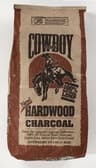
| A first experiment with lump | Cowboy Hardwood Lump | The smallest, cheapest way to find out whether they prefer it |
| Gas or pellet grill | None of the above | Neither burns charcoal — check the fuel before buying any of this as a gift |
That last row catches more gift buyers than any other mistake in this category. Charcoal is useless to somebody with a gas grill or a pellet grill, and the fuel a grill takes is not something you can tell from a photo taken across a yard.
Giving charcoal as a gift, without it looking like a chore
Fuel is a consumable, and consumables are the most-used gifts on this site — the same logic that makes rubs and sauces work. The trick is that it must arrive as part of something. A premium bag plus a chimney starter, or two small bags of different formats so they can run the comparison themselves, both read as thought. A single supermarket bag reads as a bag of charcoal.
And if the person already has their fuel sorted, the honest answer is to buy them something else entirely. The accessories roundup and the grill-cover guide both cover things a committed charcoal griller is far less likely to have bought for themselves.