How to Smoke a Pork Butt for Pulled Pork
The most forgiving big cut in barbecue. Smoke it low, wrap it when it stalls, and pull it when the probe slides in - not when the clock says so.
Quick answer
Smoke a pork butt over indirect low heat — the USDA’s smoking guidance is to keep the smoker between 225 and 300°F and to use two thermometers, one for the chamber and one for the meat. Weber wraps the roast in a foil pan at about 160°F and finishes it until the thickest part reads 195–200°F, then rests it 2 to 4 hours in a dry insulated cooler. Pork pulls when the probe slides in with no resistance, not at a particular time.
Pork butt — the upper part of the shoulder, also sold as Boston butt — is the cut to learn long cooking on. It is heavily marbled, it is cheap, and it is almost impossible to dry out, because the fat and collagen that make it tough are the same things that keep it moist while they break down. A brisket punishes mistakes. A pork butt absorbs them.
It also works on anything: a pellet grill, an electric cabinet, a kettle with the coals banked to one side, or a proper offset. The method does not change, only how much attention the fire needs.
The numbers
| Stage | Number | Source |
|---|---|---|
| Pit temperature | 225–300°F, indirect | USDA smoking guidance |
| Wrap at | About 160°F internal | Weber, apple-smoked pulled pork |
| Finish at | 195–200°F (Weber also cooks to 200–202°F wrapped in foil; its kettle guide pulls at 190°F) | Weber |
| Rest | 2–4 hours in a dry insulated cooler or turned-off oven | Weber |
| Safe minimum for pork | 145°F with a 3-minute rest — long passed here | USDA |
| Expect a long cook | Plan 4–8 hours or more; the USDA says smoking takes that long | USDA smoking guidance |
Note the finish figure is a range, and it is Weber’s range, not ours: its recipes land between 190 and 202°F depending on method. That is because the real doneness test is mechanical — when a probe slides into the thickest part with no resistance, it is ready, whatever the display says.
The method, step by step
- Buy by the person, bone in. A butt loses roughly half its weight to rendered fat and moisture, so plan on about a pound of raw bone-in pork per person for generous servings. Our per-person planning guide has the rest of the cuts.
- Trim lightly and season heavily. Take the fat cap down to about a quarter inch, leave the rest, and coat every surface with a salt-forward rub the night before if you can.
- Set up indirect and get the smoke going. Coals to one side with a water pan, a pellet grill set to 225°F, or a cabinet loaded with chips. Fat cap up is the simplest orientation on a grate.
- Leave it alone for the first few hours. The bark forms in this window and opening the lid costs you heat each time — Weber reckons 5 to 7 minutes per opening in cold weather.
- Expect the stall. Somewhere around 150–165°F the internal temperature stops climbing, sometimes for hours, as moisture evaporates off the surface. Nothing is wrong. This is where Weber’s method puts the roast in a foil pan, at about 160°F, which pushes it through.
- Finish by feel. Carry on to 195–200°F and probe it in three places. No resistance anywhere means done.
- Rest properly — this is not optional. Weber rests its pulled pork 2 to 4 hours in a dry insulated cooler or a turned-off oven. A rested butt pulls into strands; an unrested one shreds dry and tight.
- Pull, then sauce lightly. Claws or two forks, discard the big fat seams, mix the bark through the soft meat so every bite has both.
Three things that go wrong
Cooking to the clock. “Ninety minutes a pound” is a planning figure, not a doneness test. Two identical-looking butts can finish two hours apart. Start early and rest longer rather than rushing the end.
Pulling it at 165°F because that is “safe”. Safe and ready are different questions. Pork is safe at 145°F by the USDA chart; collagen does not render into gelatin until far higher, which is why pulled pork lives in the 190–205°F band.
Too much smoke, too late. Meat takes on smoke most in the early hours. Once the roast is wrapped, more wood achieves nothing — save it.
What to look for in the gear
A pork butt needs four things, and only one of them is a smoker. You need two temperature channels — the pit and the meat — which is the USDA’s own instruction and the thing most beginners skip. You need a probe you can leave in for ten hours without opening the lid. You need smoke on a grill that does not make its own. And you need something to shred several pounds of hot pork with that is not two dinner forks.
What a pork butt actually needs
Picks from our shortlists, matched to the criteria above: two temperature channels, a leave-in probe, smoke, and a way to pull it. Prices are fetched live.
How this is funded: we earn a commission if you buy through our links, at no extra cost to you. It never changes which gift we recommend, and we’ll tell you when we’d skip one. Full disclosure.
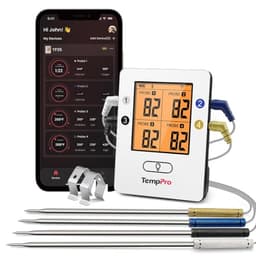
TempPro TempSync PRO TP25 4-Probe Bluetooth Thermometer
Four probes and long-range Bluetooth: one in the thickest part of the butt, one at grate level. That is the two-thermometer setup the USDA asks for, in one unit.
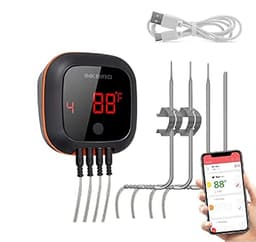
INKBIRD IBT-4XS 4-Probe Bluetooth Thermometer
The cheaper four-probe option, rechargeable with a magnetic base. Wired probes, so the cables run out of the lid - fine on a cabinet smoker.
$49.99 · View on AmazonPrice as of October 24, 2026. #ad How we’re funded

LIZZQ 12-Inch Pellet Smoker Tube (2-Pack)
Up to five hours of clean smoke on a gas grill or in a cabinet that does not make its own. Twenty dollars to turn the grill you own into a smoker.
$19.99 · View on AmazonPrice as of October 24, 2026. #ad How we’re funded
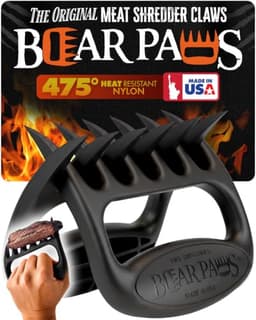
Bear Paws The Original Meat Shredder Claws
Shreds a hot shoulder in seconds and doubles as a lifting fork for getting ten pounds of pork off the grate in one piece.
$13.99 · View on AmazonPrice as of October 24, 2026. #ad How we’re funded
If this is the first long cook on the grill in question, read how to smoke on a charcoal grill or how to smoke on a gas grill for the setup, and how to smoke a brisket for the harder version of the same skill. Shopping for the machine rather than the method? Electric smoker vs pellet grill is the decision page.
Frequently asked questions
What temperature do you smoke a pork butt to?
Weber finishes its pulled pork at 195-200F in the thickest part, and its foil-wrapped Carolina version goes to about 200-202F; its kettle guide pulls at 190F. Treat it as a range and probe for feel - when the thermometer slides in with no resistance, it is ready.
How long does it take to smoke a pork butt?
Plan a long day. The USDA says smoking generally takes 4 to 8 hours, and a bone-in butt at 225-250F often runs longer than that. Cook to temperature and feel rather than to the clock, and build in time for the 2 to 4 hour rest Weber recommends.
When should you wrap a pork butt?
Weber's method moves the roast into a large disposable foil pan once it reaches about 160F, then returns it to the grill until the thickest part registers 195-200F - a further 2 to 3 hours. That is also roughly where the stall happens, so wrapping pushes it through.
What is the stall when smoking pork?
A period, usually around 150-165F, where the internal temperature stops rising while moisture evaporates from the surface and cools it. It can last hours and nothing is wrong. Wrapping - Weber uses a foil pan at about 160F - is the standard way through it.
Do you need to rest pulled pork?
Yes, and longer than people expect. Weber rests its pulled pork 2 to 4 hours in a dry insulated cooler or a turned-off oven. A rested butt pulls into moist strands; one shredded straight off the smoker comes apart dry and tight.
How much pork butt per person?
A butt loses roughly half its weight over a long cook, so plan about a pound of raw bone-in pork per person for generous servings and a little less if there are sides. Our per-person planning guide has the raw weights for every other barbecue cut.
Sources
- Weber - Apple-Smoked Pulled Pork Sandwiches — Weber's method for a pork butt: smoke over indirect low heat, move the roast into a large disposable foil pan once it reaches about 160F, return it to the grill until the thickest part registers 195-200F (a further 2 to 3 hours), then rest it 2 to 4 hours in a dry insulated cooler or a turned-off oven. Read via live web search of that exact URL on 2026-10-17 (accessed October 17, 2026)
- Weber - Carolina-Style Pulled Pork Sandwiches — Weber's second pulled-pork route: wrap the shoulder in a double layer of foil and cook it until a probe slides in easily at about 200-202F. Weber's own temperature guide lists 93-95C (about 200-203F) as the low-and-slow pulled-pork target, and its kettle smoking guide pulls at 190F - a published range, not one number. Read via live web search of that exact URL on 2026-10-17 (accessed October 17, 2026)
- USDA FSIS — Smoking Meat and Poultry — Keep the smoker or grill between 225 and 300°F, use two thermometers (food and smoker), and expect 4 to 8 hours (accessed September 18, 2026)
- USDA FSIS — Safe Minimum Internal Temperature Chart — The USDA's official safe minimum internal cooking temperatures for beef, poultry, pork and more (accessed July 21, 2026)
- Weber — 5 Tips for Grilling in the Cold — Allow extra time for the grill to reach temperature (preheat to 500°F); each time the lid is opened it adds 5 to 7 minutes; keep the grill and the pathway to it free of snow; close all vents on charcoal models when finished (accessed October 11, 2026)
Keep reading
How to Smoke a Brisket
The harder version of the same skill, with the stall explained.
Read the guideHow Much Meat Per Person
Raw weights for brisket, shoulder, ribs, chicken and burgers.
Read the guideBest Thermometers for Smoking
Pit and meat on one screen, for a ten-hour cook.
See the picksGifts for Meat Smokers
Claws, racks, tubes and probes for the low-and-slow crowd.
See the giftsBest Meat Injectors
Getting salt and moisture into the middle of a shoulder, and the safety rule that follows.
See the picks