How Much Meat Per Person for a Cookout
The number that decides whether you are carving seconds or apologizing. Our planning figures for brisket, ribs, chicken, burgers and a whole bird.
Quick answer
As a planning rule we use ½ lb of cooked meat per adult as the main course, which means buying considerably more raw than that — big barbecue cuts like brisket and pork shoulder lose a large share of their weight to rendered fat, moisture and trimming. Work in raw weight: about 1 lb of untrimmed brisket or bone-in shoulder per adult, 1 lb of ribs, ½ lb of boneless chicken or two burgers, and about 1¼ lb of whole turkey. Scale down for children and up if sandwiches are the plan.
Before anything else, an honesty note: the figures on this page are our planning numbers, built from the way these cuts behave and from cooking for groups. They are not the output of a measured study and we are not going to dress them up as one. Nobody can give you a precise universal answer, because it depends on who is coming, how many sides there are and how long the table sits.
The one idea that makes this easy
Stop thinking about what you are buying and think about what lands on the plate. A brisket goes into the cooker at 14 pounds and comes out as a good deal less than that, because fat renders, moisture leaves, and the trimming you do before it ever gets near the fire takes its own share. Ribs are mostly bone. A whole chicken is a third frame. So the useful question is never “how many pounds should I buy” in the abstract — it is “how many pounds of this cut”.
Our planning table
| Cut | Raw weight per adult | For 10 adults, buy | Why |
|---|---|---|---|
| Brisket, untrimmed packer | About 1 lb | A 12–14 lb packer | Trim, fat and moisture loss are all substantial |
| Pork shoulder, bone-in | About 1 lb | Two 5–6 lb butts, or one 10 lb | Bone plus heavy fat render; very forgiving to overbuy |
| Pork ribs | About 1 lb, or ½ rack | 5 racks | Mostly bone; people eat ribs by the rib, not by weight |
| Chicken, bone-in pieces | ¾ lb, or 2 pieces | 20 pieces | Bone and skin; thighs stretch further than breasts |
| Chicken, boneless | ½ lb | 5 lb | Very little loss, so raw and cooked are close |
| Burgers | ½ lb, as 2 patties | 5 lb of ground beef | Two quarter-pounders beats one half-pounder at a party |
| Steak | ½–¾ lb | 10 steaks | Buy by the steak, not by the pound |
| Whole turkey | About 1¼ lb | A 12–14 lb bird | Frame and cavity are a large share of the weight |
| Sausages or brats | 2 links | 20 links | Almost no loss; easy to cook in batches |
The adjustments that actually matter
Children. Count two children as one adult and you will be close. Count teenagers as adults, or as more than adults.
Sides. A table with four substantial sides eats noticeably less meat than a table with a bag of chips. If the sides are thin, add a quarter to the meat.
Sandwiches versus plates. Pulled pork on a bun stretches much further than pulled pork on a plate. If the plan is sandwiches, our half-pound-cooked figure can come down toward a third of a pound.
How long it runs. A three-hour party is one meal. An all-afternoon party is a meal and a half, because people graze.
Leftovers are not waste. This is the real reason to round up on brisket and shoulder: both reheat well, and both are better the next day in a sandwich. Nobody has ever regretted extra pulled pork.
Cooking for a crowd changes the cook, not just the shopping
A grate that comfortably handles dinner for four does not handle dinner for twelve, and this is where people come unstuck. Two options: cook in waves and hold the finished food covered in a low oven, or cook something that finishes all at once and gets carved — which is exactly why brisket, shoulder and whole birds are party food in the first place. If the grate is the binding constraint, that is a grill-size question: Weber Spirit vs Genesis is the clearest version of it, with the published grate areas side by side.
What to look for in the gear for a crowd
Three things. A slicer long enough to cross the cut in one pull — a brisket flat is wider than most kitchen knives. Somewhere to rest it that catches the juice instead of sending it across the counter. And something to handle hot meat with, because twenty pounds of pork shoulder does not move with a fork.
The four things that make cooking for a crowd work
Picks from our knife and smoker shortlists, matched to the criteria above. Prices are fetched live.
How this is funded: we earn a commission if you buy through our links, at no extra cost to you. It never changes which gift we recommend, and we’ll tell you when we’d skip one. Full disclosure.
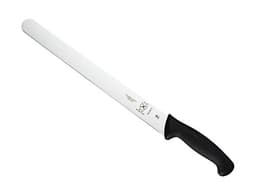
Mercer Culinary M23870 Millennia 12-Inch Plain-Edge Slicer
A 12-inch plain-edge slicer that crosses a brisket flat in one pull instead of sawing at it — the difference between barbecue-counter slices and home ones.
$29.92 · View on AmazonPrice as of October 10, 2026. #ad How we’re funded
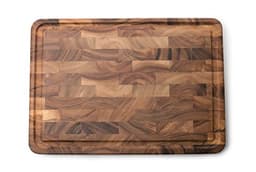
Ironwood Gourmet Charleston End Grain Board with Channel, 20 x 14 in
A 20 x 14 in end-grain board with a channel the maker rates at 10 fl oz, which is enough to hold what runs out of a rested brisket.
$78.28 · View on AmazonPrice as of October 10, 2026. #ad How we’re funded
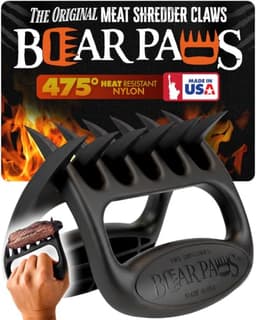
Bear Paws The Original Meat Shredder Claws
For the pork shoulder that feeds the overflow. Shreds in seconds and doubles as a lifting fork for getting a heavy cut off the grate in one piece.
$13.99 · View on AmazonPrice as of October 10, 2026. #ad How we’re funded
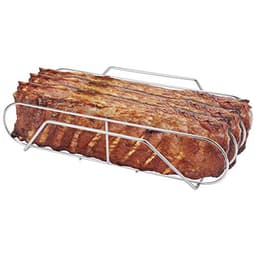
Char Chimney Pick Extra-Long Stainless Rib Rack
An extra-long stainless rack that stands racks of ribs on edge, so five racks fit in the space two would lie flat in. The cheapest way to buy grate area.
$23.99 · View on AmazonPrice as of October 10, 2026. #ad How we’re funded
Once the shopping list is settled, the cooks themselves are here: brisket, ribs, burgers and turkey. For a party of people with mixed appetites, easy things to grill is the low-risk list.
Frequently asked questions
How much meat per person for a BBQ?
We plan on about half a pound of cooked meat per adult as the main course. In raw weight that means roughly 1 lb per adult of untrimmed brisket, bone-in pork shoulder or ribs, three-quarters of a pound of bone-in chicken, or half a pound of boneless chicken, ground beef or steak.
How much brisket per person?
About a pound of untrimmed packer brisket per adult. A 12 to 14 lb packer is the usual buy for ten people. The gap between that and the half-pound they actually eat is trim, rendered fat and moisture, all of which leave before the meat reaches the plate.
How much pulled pork per person?
About a pound of bone-in shoulder per adult for plates, and less if it is going on buns — sandwiches stretch pulled pork a long way. Shoulder is the most forgiving thing to overbuy because it reheats so well.
How many ribs per person?
Half a rack per adult as part of a spread, a full rack if ribs are the only main and the appetites are serious. People eat ribs by the rib rather than by weight, so count bones rather than pounds when you are shopping.
What size turkey do I need?
About 1¼ lb of whole bird per adult, so a 12 to 14 lb turkey for ten people. The frame and cavity are a big share of that weight, which is why the per-person figure looks so much higher than it does for boneless cuts.
How many burgers should I plan per person?
Two quarter-pound patties rather than one half-pound patty. Two smaller burgers cook faster, come off the grill in waves, and let people take one and come back — which is how people actually eat at a cookout.
Should I buy extra?
On brisket, shoulder and sausages, yes — all three reheat well and leftovers are genuinely useful. On steak and boneless chicken breast, buy what you need, because reheated steak is a poor second day.
Do children count as half an adult?
Close enough for planning. Two young children to one adult portion works; teenagers should be counted as adults or more. The bigger variable is usually how many sides there are, not who is at the table.
Sources
- USDA FSIS — Safe Minimum Internal Temperature Chart — The USDA's official safe minimum internal cooking temperatures for beef, poultry, pork and more (accessed July 21, 2026)
- USDA FSIS — Grilling Food Safely — USDA guidance on safe grilling, thermometer use and avoiding cross-contamination (accessed July 21, 2026)
Keep reading
How to Smoke a Brisket
The cook the biggest number on this page is for.
Read the guideEasy Things to Grill
Low-risk food for feeding a group.
Read the guideBest BBQ Knives
Brisket slicers from 11 to 14 inches, judged on blade and edge.
See the knivesGifts for Meat Lovers
A slicer, a board, a press and the probe that stops overcooking.
See the giftsHow to Smoke a Turkey
What size bird, and how long it takes.
Read the guideWeber Spirit vs Genesis
When the grate, not the shopping list, is the constraint.
Read the comparison