How to Grill Tri-Tip
Tri-tip is the cheapest way to put a roast on the grill and have it taste like steak. Sear it, finish it indirect, pull it at 125°F — Weber's numbers, and the one slicing rule that matters.
Quick answer
Set up for direct and indirect cooking over medium heat, 350 to 400°F. Sear a 2 to 2½ lb tri-tip over the direct side for 10 minutes with the lid closed, turning once, then move it to the indirect side for another 20 to 30 minutes until an instant-read thermometer reads 125°F for medium rare. Rest it 10 to 15 minutes and slice across the grain. Those are Weber’s figures; the USDA’s safe minimum for whole cuts of beef is 145°F.
Tri-tip sits in an odd and very useful place. It is a roast — a two to three pound triangular cut off the bottom sirloin — but it cooks in about forty minutes and eats like steak. That combination is why it feeds a table for a fraction of what the same number of ribeyes would cost, and why it is worth knowing how to cook even if you have never seen one at your butcher.
The method is a sear followed by indirect heat, which is the opposite order to a reverse sear and works here because the cut is relatively thin for a roast. Weber’s recipe for a 2 to 2½ pound tri-tip is specific enough to follow exactly.
The numbers
| Stage | Weber’s figure |
|---|---|
| Roast size | 2 to 2½ lb |
| Grill setup | Direct and indirect, medium heat |
| Grill temperature | 350 to 400°F |
| Sear | 10 minutes over direct heat, turning once, lid closed |
| Finish | 20 to 30 minutes over indirect heat |
| Pull at | 125°F internal for medium rare |
| Rest | 10 to 15 minutes |
| Slice | Across the grain |
Thirty to forty minutes of grill time total, then the rest. A bigger roast takes longer, which is exactly why the thermometer rather than the clock decides when it comes off.
Doneness, and the safety number
Weber pulls this roast at 125°F for medium rare, which is a doneness preference. The USDA’s safe minimum internal temperature for whole cuts of beef is 145°F followed by a three-minute rest, and cooking below that is a choice the cook makes. The USDA is also explicit that color is not a reliable test of doneness, so this is a cook you measure rather than eyeball — particularly on a wedge-shaped cut that is much thicker at one end than the other.
That taper is worth planning for. A tri-tip has a thick end and a thin end, so it will produce a range of doneness from one slice to the next on purpose. If somebody at the table wants it more done, serve them from the thin end rather than cooking the whole roast further.
Why the slicing rule decides the texture
Weber’s instruction is to slice the meat across the grain, and on tri-tip this does more work than it does on almost anything else. Cut with the grain and you get long muscle fibers in every slice, which chew like rope no matter how well you cooked it. Cut across them and the same roast is tender.
Look at the surface of the meat before you start and find the direction the fibers run. Then cut perpendicular to them. If the roast is large enough that the grain direction clearly changes across it, cut the roast into sections first and slice each section across its own grain rather than carving the whole thing in one direction.
Charcoal, gas or pellet
All three work, because all three can be arranged with a hot side and a cooler side. On charcoal, bank the coals; on gas, light some burners and leave others off; on a pellet grill, use the whole grate at 350–400°F and sear in cast iron if the grill cannot get hot enough on its own. Our direct vs indirect heat guide covers the arrangement, and best grills for searing steak deals with grills that struggle at the top end.
What to look for in the gear
Two tools matter here, and they are the same two that matter for every large cut of beef.
An instant-read thermometer is the one that is not optional. Weber’s method ends at a number, not a time, and on a tapered roast you will want to check more than one spot. Look for a read in a few seconds and a thin tip.
A long knife is the other. Slicing a tri-tip across the grain in clean, even pieces needs a blade that crosses the roast in one pull; a short chef’s knife turns into a saw and tears the fibers you were careful to cut across. A granton or hollow edge helps the slices release instead of sticking to the blade. A board with a channel catches what a rested roast gives up, and cast iron is the fix if the grill cannot sear properly by itself.
What a tri-tip actually needs
Four picks from our thermometer and knife shortlists, matched to the criteria above. Prices are fetched live.
How this is funded: we earn a commission if you buy through our links, at no extra cost to you. It never changes which gift we recommend, and we’ll tell you when we’d skip one. Full disclosure.
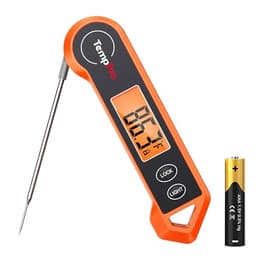
TempPro TempSwift PLUS TP19H Instant-Read Thermometer
A three-second instant-read for about fifteen dollars. On a tapered roast you want to check two or three spots, which is exactly what this is for.
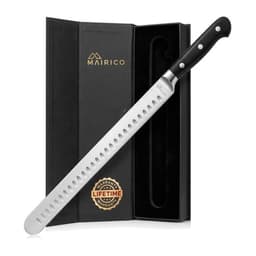
MAIRICO Ultra Sharp Premium 11-Inch Carving Knife
Eleven inches of granton-edged blade at an add-on price — long enough to cross a tri-tip in one pull so the slices stay even.
$20.99 · View on AmazonPrice as of October 5, 2026. #ad How we’re funded
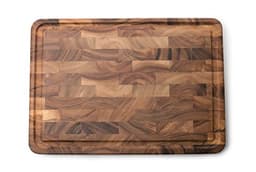
Ironwood Gourmet Charleston End Grain Board with Channel, 20 x 14 in
End-grain acacia with a juice channel the maker rates at 10 fl oz, so a rested roast does not empty itself across the counter.
$78.28 · View on AmazonPrice as of October 5, 2026. #ad How we’re funded
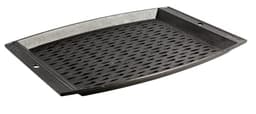
Lodge Pre-Seasoned Cast Iron Rectangle Grill Topper, 15-Inch
Cast iron for the sear if the grill cannot manage one — it holds far more heat than the bars do and browns properly at 400°F.
How to grill tri-tip, step by step
- Season and set up two zones. Weber uses direct and indirect medium heat, 350 to 400°F.
- Sear it. 10 minutes over the direct side with the lid closed, turning once.
- Move it over to finish. 20 to 30 minutes over indirect heat.
- Pull at 125°F for medium rare. Check the thick end, and remember the thin end will be further along.
- Rest 10 to 15 minutes. Indoors, at room temperature.
- Slice across the grain. Find the fiber direction first; section the roast if the direction changes across it.
Common mistakes
Treating it like a steak and leaving it over direct heat. A two-inch-thick roast over a hot fire burns outside and stays raw in the middle. The sear is ten minutes, not the whole cook.
Cooking to time. Tri-tips vary by a pound or more. The 20 to 30 minute window is Weber’s figure for a 2 to 2½ lb roast; measure rather than assume.
Carving it the easy way. The direction you cut matters more than anything you did to it before. See the knives built for exactly this.
Frequently asked questions
How long do you grill a tri-tip?
About 30 to 40 minutes of grill time for a 2 to 2½ lb roast, in Weber's method: 10 minutes searing over direct medium heat turning once, then 20 to 30 minutes over indirect heat. Then 10 to 15 minutes resting. A bigger roast takes longer, so cook to temperature rather than to the clock.
What temperature should tri-tip be?
Weber pulls it at 125°F internal for medium rare. That is a doneness preference — the USDA's safe minimum for whole cuts of beef is 145°F followed by a three-minute rest.
Do you grill tri-tip direct or indirect?
Both. Weber sears it over direct medium heat for 10 minutes with the lid closed, then moves it to indirect medium heat for 20 to 30 minutes to finish. The grill runs at 350 to 400°F for both stages.
Which way do you slice tri-tip?
Across the grain — Weber's instruction, and the single biggest factor in how tender it eats. Look at the surface to find the direction the fibers run and cut perpendicular to them. If the grain direction clearly changes across the roast, cut it into sections and slice each one across its own grain.
How long should tri-tip rest?
Weber rests it 10 to 15 minutes indoors at room temperature. The internal temperature will keep climbing a few degrees while it sits, which is another reason to pull it before it reaches the number you want.
Can you grill tri-tip on a gas grill?
Yes. Light some burners and leave the others off so you have a direct and an indirect zone, run the grill at 350 to 400°F, and follow the same sear-then-finish timings. The method does not change with the fuel.
Sources
- Weber — Tri-Tip Roast with Coffee-Chile Rub and Adobo Sauce — A 2 to 2½ lb tri-tip: direct then indirect medium heat (350-400°F), 10 minutes searing turning once, 20 to 30 minutes indirect to 125°F for medium rare, rest 10 to 15 minutes, slice across the grain (accessed October 5, 2026)
- USDA FSIS — Safe Minimum Internal Temperature Chart — The USDA's official safe minimum internal cooking temperatures for beef, poultry, pork and more (accessed July 21, 2026)
- USDA FSIS — Doneness Versus Safety — USDA on why color is not a reliable doneness test and a thermometer is (accessed July 21, 2026)
Keep reading
How to Reverse Sear a Steak
The opposite order, for cuts over an inch thick.
Read the guideBest BBQ Knives
The long plain-edge blade this cut needs at the board.
See the knivesBest Steak Cuts for Grilling
Where tri-tip sits against ribeye, strip and sirloin.
Read the guideBest Meat Thermometers
The instant-read this method ends on.
See the thermometersGifts for Meat Lovers
A slicer, a board and the probe that stops overcooking.
See the giftsDirect vs Indirect Heat
The two-zone setup both stages depend on.
Read the guide