Maximum heat, by the maker’s numbers
| Grill | How it sears | Published heat figure |
|---|
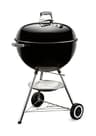
| Weber Original Kettle | Live charcoal directly under the grate | No temperature rating published |
| Char-Griller AKORN | Insulated kamado, cast iron grates | Rated 200-700°F |
| Kamado Joe Classic II | Ceramic kamado | Rated 225-750°F |
| recteq Bullseye RT-B380 | Round pellet grill built for heat | Rated up to 749°F |
| Pit Boss 500 FB2 | Flame Broiler lever opens the fire pot to direct flame | Direct flame rated up to 1,000°F |
| Weber Spirit E-325 | Two boost burners under a Sear Zone, cast iron grates | “40% more power in the Sear Zone” |
| Lodge cast iron topper | Stores heat and gives it back to the meat | Depends on the grill underneath |
Two cautions on reading that table. First, the numbers are not measured the same way: the Pit Boss figure is for open flame over an opened section of the fire pot, and Weber rates the Spirit’s Sear Zone as extra power rather than as a temperature. Second, a charcoal kettle has no published rating at all, yet a full chimney of lit coals banked on one side sears very hard. Treat the table as a map of how each grill sears, not a leaderboard.
Why a plain charcoal kettle is our top pick
For searing steak specifically, the cheapest grill on this list is the best one for most people. The Weber Original Kettle puts live charcoal a few inches under the meat, makes a two-zone fire trivially easy — coals on one side, nothing on the other — and costs a fraction of anything else here. It is the same 22-inch bowl as the pricier Premium; the Premium adds a lid thermometer and an enclosed, high-capacity ash catcher, neither of which touches the sear. If the person you are buying for already owns a kettle, skip to the topper at the bottom of the list.
Kamados: the hottest charcoal, with a cost
A kamado’s thick, insulated body lets it run much hotter than a kettle and hold that heat when the lid opens. Char-Griller rates the steel Akorn from 200 to 700°F; Kamado Joe rates the ceramic Classic II from 225 to 750°F. Either sears superbly and also smokes, which is why they appeal to the cook who wants one grill for everything. The costs are weight (the Classic II is 227.7 lb), footprint, and in the Kamado Joe’s case, price. Our kamado vs kettle comparison covers when the upgrade is worth it.
Pellet grills that can actually sear
Most pellet grills cannot, because a steel baffle sits between the fire and the food. The two here work around it in different ways. The recteq Bullseye is a round grill under a stainless dome that recteq rates up to 749°F; it is the pellet grill for somebody who cooks steak more than brisket. The Pit Boss 500 FB2 keeps the usual layout but adds a Flame Broiler lever that slides part of the baffle open, putting food on that section over open flame rated up to 1,000°F. Both are covered in more depth in our pellet grill roundup.
The gas grill that is built for it
A propane burner is a gentler heat than charcoal, which is why gas is the weakest fuel for steak. The Weber Spirit E-325 is our gas pick because Weber built searing into it: two boost burners give what Weber describes as 40% more power in the Sear Zone, over porcelain-enameled cast-iron grates that hold heat well. If they want the convenience of gas and cook a lot of steak, this is the one. The rest of our gas shortlist is in the gas grill roundup.
Already own a grill? Buy the topper
The Lodge pre-seasoned cast iron topper is the most cost-effective upgrade on the page. Set on an ordinary grate and preheated, its mass stores heat and hands it back to the steak, which is most of what a better grill would do. It takes several minutes longer to preheat than the grate and needs the same care as any cast iron. For a steak lover who already has a grill they like, it is a better gift than a new grill — and our gifts for steak lovers list has the rest.
Searing well on any of them
- Build two zones. Hot on one side, cool on the other. Sear over the hot side, finish on the cool side. Our direct vs indirect guide shows the layouts.
- Preheat fully with the lid down. Heavy grates need the time to soak up heat, and a cold grate is what makes steak stick and steam.
- Dry the surface. A wet steak spends its first minute boiling off water instead of browning.
- Pull it by temperature, not by time. The USDA safe minimum for beef steaks is 145°F with a three-minute rest; many cooks pull earlier for rarer steak, which is a choice to make knowingly. An instant-read thermometer is the only way to know — and our steak cuts guide covers which cuts suit a hard sear.
What we would skip
A standard pellet grill for a steak lover. Unless it has a searing feature, it tops out around 450 to 500°F. Great for ribs, disappointing for a ribeye.
Shopping a gas grill by its BTU number. BTU measures how much gas the burners can use, not how well the grill sears. Heavy grates and a full preheat matter more — our gas grill roundup explains why.
A salt block as a searing surface for someone new to it. It works, but it comes with slow, careful heating rules — our salt block review explains them.