What the numbers on the box mean
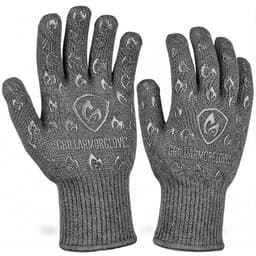
932°F is a manufacturer heat-resistance rating, not a promise that you can hold a burning log indefinitely. Ratings like this describe how the material behaves under a defined contact time; what it means in practice is that you can grab a hot grate, move a chimney starter, or reposition coals for a few seconds without pain. Leave your hand there and heat will get through, as it will with any glove.
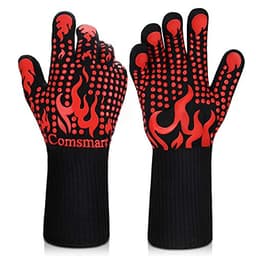
Fourteen inches is the number that actually changes the experience. Short mitts protect the palm and leave the forearm exposed exactly where it passes over the fire. The long cuff is why these get used for lifting a grate out of a kettle, and why oven mitts do not.
Neoprene versus silicone
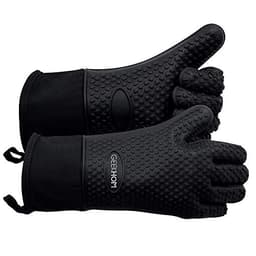
The two common materials do different jobs. Neoprene, as here, is textured, flexible and waterproof, with a cotton lining inside. It grips a hot grate well and wipes clean of grease.
Silicone gloves are fully waterproof, dishwasher-friendly and easy to hose off, but they are usually thicker and less dexterous, and they can feel slippery on a smooth surface. If the person you are buying for handles a lot of wet or greasy work, silicone has a real argument. We put the two side by side in neoprene vs silicone grilling gloves.
What they are genuinely good for
Charcoal work, mainly. Lifting a lit chimney starter and pouring it, moving a hot grate to add coals, adjusting a water pan mid-cook, pulling a cast-iron pan off the grate. Anything where the alternative is a folded tea towel and a hopeful expression.
They also cover a job most people do not think of: handling hot food directly. Pulling pork, moving a whole chicken, turning ribs. A pair of gloves does that far better than tongs, which is why they appear in almost every smoker gift list.
The honest downsides
They run large. This is the most consistent complaint about long BBQ gloves generally and this pair in particular. For someone with smaller hands the fit is loose, and a loose glove makes fine work harder. It is the one thing that would make me hesitate if I were buying for a petite recipient.
They are bulky. These are not gloves you wear for the whole cook. You put them on for the awkward job and take them off again. Anyone expecting to flip burgers in them will be disappointed.
They are not fireproof. Sustained direct flame contact will get through any glove in this class. They are heat-resistant, which is a different claim.
They are not exciting to unwrap. This is a practical gift and it looks like one in the box. Pair it with something that has more visual appeal if it is the only thing you are giving.
Who to buy them for
Anyone who cooks with charcoal, full stop. Also anyone who has visibly burned themselves — people remember that, and a gift that acknowledges it lands well. And anyone getting into smoking, where handling large, hot cuts by hand is part of the job.
They are an especially good second item in a bigger gift. A grill, a chimney starter or a tool set all pair naturally with gloves, and the combination reads as thoughtful rather than functional.
Who should get something else
Someone who grills exclusively on gas and never touches the grate with their hands. They will use gloves twice a year. A thermometer or a good apron gets far more use in that household.
And anyone with small hands, unless you can check the sizing first. A glove that does not fit is a glove that stays in the drawer.