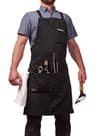
How to choose a BBQ apron
Start with the fabric, because it decides how long the apron lasts and how it smells after a summer. Cotton duck — the stuff work jackets are made from — is the standard for a reason: it takes heat spatter without melting, and it washes clean. Waxed canvas goes a step further and actively repels liquid, so a splash of marinade beads instead of soaking in. Coated or waterproof fabrics are the cheapest way to get that same protection, with the trade-off that they don’t breathe on a hot day.
What you want to avoid is thin polyester. It stains, it holds smoke odor, and it will not survive a stray ember. If an apron’s listing leads with a print rather than a fabric weight, that tells you where the money went.
Cross-back or neck strap?
A traditional apron loops around the neck, and all the weight of a wet, loaded apron hangs off the back of the wearer’s neck. For twenty minutes that’s fine. For an afternoon cooking for a crowd, it’s a genuine ache. Cross-back straps run over both shoulders and cross behind, spreading the load like a rucksack.
The catch is fit: a neck strap adjusts to almost anyone, while cross-back designs have a narrower range. If you’re buying for someone whose build you can’t picture, an adjustable neck strap is the safer gift. If you know them well, cross-back is the more comfortable apron.
Pockets, loops and length
Two deep front pockets cover the essentials. A towel loop is the detail that separates aprons designed by someone who cooks from aprons designed by someone who doesn’t — it keeps a cloth to hand instead of on the floor. Length matters too: an apron that stops at the hip protects a shirt but not the trousers, and the grease that lands is usually below the belt.
One honest word on novelty aprons. They are funny once. If the joke is the entire gift, look at our funny grilling giftsinstead and buy the apron separately — a good apron and a good joke rarely come in the same package.