How to Grill Shrimp (Without Losing Any Through the Grate)
Shrimp need two to four minutes over a hot fire and almost no attention — except to the two things that go wrong: overcooking and losing them between the bars.
Quick answer
Grill shrimp over direct high heat — Weber gives 450 to 550°F — with the lid closed, for 2 to 4 minutes, turning once. They are done when they are slightly firm on the surface and opaque in the center. Use extra-large shrimp (16/20 count per pound) so they are harder to overcook, and thread them on skewers or use a basket, mat or cast iron plate so none are lost through the grate. Soak bamboo skewers for at least 30 minutes first.
Shrimp are one of the few things on a grill where the entire cook is over before you have finished arranging them. Two to four minutes, total. That makes them brilliant for a weeknight and unforgiving if you walk away — thirty seconds too long turns shrimp from springy to rubbery, and no amount of sauce fixes it.
There are really only two problems to solve: knowing exactly when to take them off, and keeping them out of the fire. Everything below is about those two.
Heat, time and the doneness test
| Weber’s figures | |
|---|---|
| Shrimp size | Extra-large, 16/20 count per pound |
| Heat | Direct high heat, 450–550°F |
| Lid | Closed |
| Time | 2 to 4 minutes, turning once |
| Done when | Slightly firm on the surface and opaque in the center |
| Bamboo skewers | Soaked in water at least 30 minutes |
Shrimp are far too small and too quick for a probe, so this is one of the few grill cooks judged by look and feel rather than by a number. Weber’s test is the right one: opaque through the middle, slightly firm to the touch, and still curled rather than tight. A shrimp that has drawn itself into a hard ring has gone too far.
Size matters more here than almost anywhere else. A big shrimp takes long enough to cook that you have a margin for error; small shrimp are done the moment they are warm. Buying extra-large is the single easiest way to make this cook forgiving — Weber specifies 16/20 count per pound for exactly that reason. Keeping the shells on is the other buffer: they shield the flesh and keep it moist, at the cost of a messier table.
Four ways to keep them out of the fire
A raw shrimp is almost exactly the shape and size of the gap between grill bars. These are the four fixes, in rough order of how well they work.
Skewers are the classic, and the only method that lets you turn twelve shrimp with one movement. Push the skewer through twice — once near the tail and once near the head — so the shrimp cannot spin when you flip it. Soak bamboo for at least thirty minutes, or use metal and avoid the question. Two parallel skewers through each shrimp is the trick that stops all spinning.
A perforated basket is the fastest way to deal with a pound of loose shrimp. Nothing falls through, you can toss rather than turn, and it comes off the grill in one piece. Depth is what matters: a deep basket lets you genuinely shake the contents.
A grill mat stops anything falling through and makes cleanup trivial, with the trade-off that it blocks the bars, so you get less browning and no grill marks.
Cast iron is the option most people overlook and the best one for flavor. A pre-seasoned plate or topper holds serious heat, so shrimp brown rather than steam — which is the complaint people have about baskets and mats. It also doubles as the surface for a garlic-butter finish right on the grill.
Marinades, sauce and the acid rule
Shrimp take on flavor quickly because they are small, which cuts both ways. Fifteen to thirty minutes in a marinade is plenty; a few hours in a citrus-heavy one and the acid starts firming the flesh before any heat touches it. If the marinade is mostly lemon or lime juice, treat it as a last-minute dressing instead.
Anything with sugar in it — honey, barbecue sauce, a sweet chilli glaze — goes on at the very end. Over 450°F, sugar is burnt long before two minutes are up. Brush it on after the turn, or off the heat.
What to look for in the gear
Everything here is about containment and heat.
In a basket, look for depth and a handle that either folds or detaches: depth lets you toss the shrimp instead of nudging them, and a folding handle means the thing actually fits in a drawer. Stainless and genuinely dishwasher-safe is worth checking — fine-mesh baskets are frequently neither.
In cast iron, look for pre-seasoning so it works out of the box, and perforations if you want some fire flavor as well as browning. In a basting brush, silicone rated well above grill temperature matters because a natural-bristle brush sheds into the sauce, and a glaze brushed on at the end is how most shrimp get finished.
What keeps shrimp on the grill
Four picks from our basket and accessory shortlists, matched to the criteria above. Prices are fetched live.
How this is funded: we earn a commission if you buy through our links, at no extra cost to you. It never changes which gift we recommend, and we’ll tell you when we’d skip one. Full disclosure.
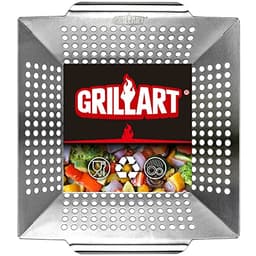
GRILLART Heavy-Duty Large Grill Basket
Deep enough to actually toss a pound of shrimp rather than nudge them around, with a folding handle so it stores flat.
$29.99 · View on AmazonPrice as of October 5, 2026. #ad How we’re funded
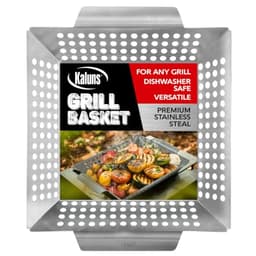
Kaluns Heavy Duty Stainless Steel Vegetable Grill Basket
The value pick: a rectangular stainless basket that is genuinely dishwasher safe, which almost nothing else in this category honestly is.
Lodge Pre-Seasoned Cast Iron Rectangle Grill Topper, 15-Inch
Pre-seasoned cast iron with holes in it. The mass is what browns shrimp instead of steaming them, which is the usual complaint about baskets and mats.
HOTEC 600°F Silicone Basting Brushes
600°F silicone that will not shed bristles into the glaze — and a sugary glaze goes on in the last thirty seconds, which is exactly when you need it.
$7.47 · View on AmazonPrice as of October 5, 2026. #ad How we’re funded
How to grill shrimp, step by step
- Buy big shrimp. Extra-large, 16/20 count per pound, is Weber’s size and the most forgiving.
- Prep them. Peel and devein if you like, or leave shells on for moisture. Pat dry, oil lightly, season.
- Choose your containment. Skewers (bamboo soaked 30 minutes, or metal), a basket, a mat or cast iron.
- Get the grill properly hot. Direct high heat, 450 to 550°F.
- Grill 2 to 4 minutes, lid closed, turning once. Stay at the grill.
- Take them off at opaque and slightly firm. Glaze at the end if you are using one, and serve straight away.
On a griddle or flat top
Shrimp are excellent on a flat top: nothing falls through, the whole surface browns them, and a garlic-butter finish works far better in a puddle than it does through bars. You lose the fire flavor and the marks. If that is the route, our griddle size comparison covers which plate to buy and seasoning a griddle covers keeping it non-stick.
For the rest of the quick, small things that fall through a grate, see grilling asparagus and grilling vegetables, which solve the same problem in the same four ways.
Frequently asked questions
How long do you grill shrimp?
2 to 4 minutes over direct high heat with the lid closed, turning once — Weber's figures for extra-large shrimp. They are done when slightly firm on the surface and opaque in the center. Small shrimp are faster again, which is why extra-large are easier to get right.
What temperature do you grill shrimp at?
Direct high heat. Weber gives 450 to 550°F. High heat and a very short cook is what browns the outside before the inside turns rubbery; a moderate grill steams them instead.
How do you know when grilled shrimp are done?
They are too small for a thermometer, so judge by look and feel: opaque through the center and slightly firm to the touch, still curved rather than drawn into a tight ring. A shrimp curled into a hard circle is overcooked.
How do you stop shrimp falling through the grill?
Four options. Skewers — push through twice, near the head and the tail, so they cannot spin; a perforated basket, which is fastest for a pound of loose shrimp; a grill mat, which blocks everything but costs you browning; or a cast iron topper, which holds the most heat and browns best.
Do you soak wooden skewers before grilling?
Yes. Weber soaks bamboo skewers in water for at least 30 minutes so the exposed ends do not burn through during the cook. Metal skewers avoid the question entirely and can be reused.
Should you grill shrimp with the shell on or off?
Shell on protects the flesh and keeps it moist, at the cost of a messier job at the table. Shell off takes marinade and glaze better and is easier to eat. Either works at the same heat and time — this one is a preference.
Can you marinate shrimp?
Yes, but briefly. Fifteen to thirty minutes is plenty, because shrimp are small and take on flavor fast. A very acidic citrus marinade left for hours starts firming the flesh before it ever reaches the grill, so treat heavy lemon or lime mixtures as a dressing for afterwards.
Sources
- Weber — Sweet and Spicy Shrimp Kabobs — Extra-large (16/20 count) shrimp over direct high heat (450-550°F) with the lid closed, 2 to 4 minutes turning once, until slightly firm on the surface and opaque in the center; soak bamboo skewers 30 minutes (accessed October 5, 2026)
- USDA FSIS — Grilling Food Safely — USDA guidance on safe grilling, thermometer use and avoiding cross-contamination (accessed July 21, 2026)
Keep reading
Best Grill Baskets & Toppers
Four designs, and which is right for shrimp.
See the basketsGrill Basket vs Grill Mat
One keeps the grilling; the other turns the grill into a griddle.
Read the comparisonGrilling Asparagus
The same falling-through problem, solved the same four ways.
Read the guideHow to Grill Salmon
The other seafood cook, and why it sticks.
Read the guideGrilling Vegetables
Group by density and the burnt-outside problem disappears.
Read the guideBest Grilling Accessories
Baskets, brushes, misters and the rest of the useful kit.
See the accessories