What woven mesh does differently
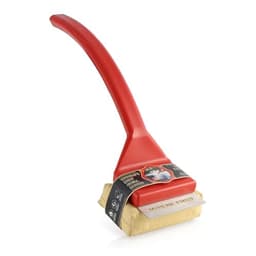
A traditional grill brush holds short wires in a twisted metal core. That core corrodes over time in exactly the environment a grill brush lives in — heat, grease, rain — and as the wires fatigue, individual ones work free. There is no way to know when a brush is about to start shedding.
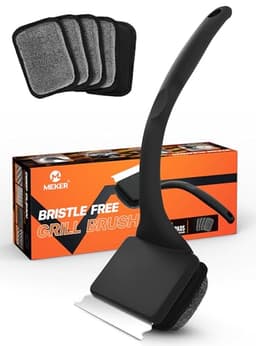
Woven mesh has no individual wires to lose. The cleaning surface is a continuous fabric of steel, so as it wears it thins rather than shedding pieces. If it eventually tears, the damage is visible and the brush obviously needs replacing — which is a much better failure mode than an invisible one.
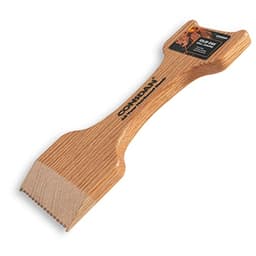
The mesh also wraps around round grate bars as you push it, which a flat scraper edge cannot. That is why it works well on the thin round stainless bars most gas grills use, and it is the main functional argument for a woven head over a wooden scraper.
Handle length and leverage
Eighteen inches is the sweet spot for a grill brush, for the same reason it is for tongs: it keeps knuckles clear of a hot grate while still giving enough leverage to lean on a stubborn patch. Shorter brushes are cold-grate brushes, which defeats the purpose, because residue comes off a hot grate with a fraction of the effort.
That is worth saying explicitly when you hand this over, because it is the single biggest improvement anybody can make to grill cleaning and it costs nothing. Preheat for ten minutes with the lid down, then scrape. The heat has already carbonized most of the residue. It is one of the habits in our beginner grilling tips.
Where it falls short
Heavy baked-on carbon is not its strength. Mesh cleans a regularly maintained grate very well. A grate that has been neglected for a season wants a scraper edge or a dedicated wooden scraper first, and then this to finish.
It's still steel, which matters on porcelain. Bristle-free removes the loose-wire risk, not the abrasion. Porcelain-coated grates — common on mid-range gas grills — can chip under hard steel, and chips are where rust starts. If you do not know what their grate is made of, a wooden scraper is the safer gift.
The head is not replaceable. When the mesh wears through, the whole tool goes. Brushes sold with spare heads get replaced on schedule; one-piece brushes get used a year past their retirement date because binning a whole tool feels wasteful.
It is a cleaning tool. Nobody unwraps a cleaning tool with delight. This needs pairing to work as a present.
Who this is the right gift for
Anybody who still owns a wire brush — which, given how many are sold, is most people with a grill. It is a straight replacement at roughly the same price, and the argument for switching is easy to make in one sentence.
It is also the right thing to add to a big gift. Anyone receiving a grill needs something to clean it with on day two, and it is the least likely accessory for them to have thought about. A brush plus a chimney starter plus a bag of charcoal is a complete, thoughtful gift for a charcoal griller for well under fifty dollars.
Who should get something else
Someone with porcelain-coated or cast iron grates who is fussy about them — a wooden scraper is gentler and cannot chip a coating. Someone with a flat-top griddle, who needs a griddle scraper rather than any kind of brush, because a seasoned surface should not be scrubbed back to bare metal.
And someone who genuinely enjoys the maintenance side and would appreciate a step up — the steam brushes in our brush roundup are the splurge in this category, and they suit exactly one type of person.